Stainless steel panel tanks provide a flexible solution for storing water and other liquids. Unlike conventional welded tanks, these systems are assembled from individual stainless steel panels. The panels are connected on-site to create a complete storage tank. This construction method allows tanks to be installed in locations where large factory-built tanks may be impractical.
It also gives designers greater flexibility when selecting tank dimensions and storage capacity. Stainless steel panel tanks are used across commercial, industrial, municipal, and institutional facilities. They are particularly useful where corrosion resistance, hygiene, durability, and long service life are priorities.
This guide explains how stainless steel panel tanks work and why they are called sectional tanks. It also covers common applications, stainless steel grades, maintenance, costs, advantages, and limitations.
What are Stainless Steel Panel Tanks?
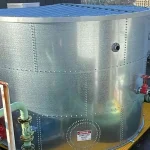
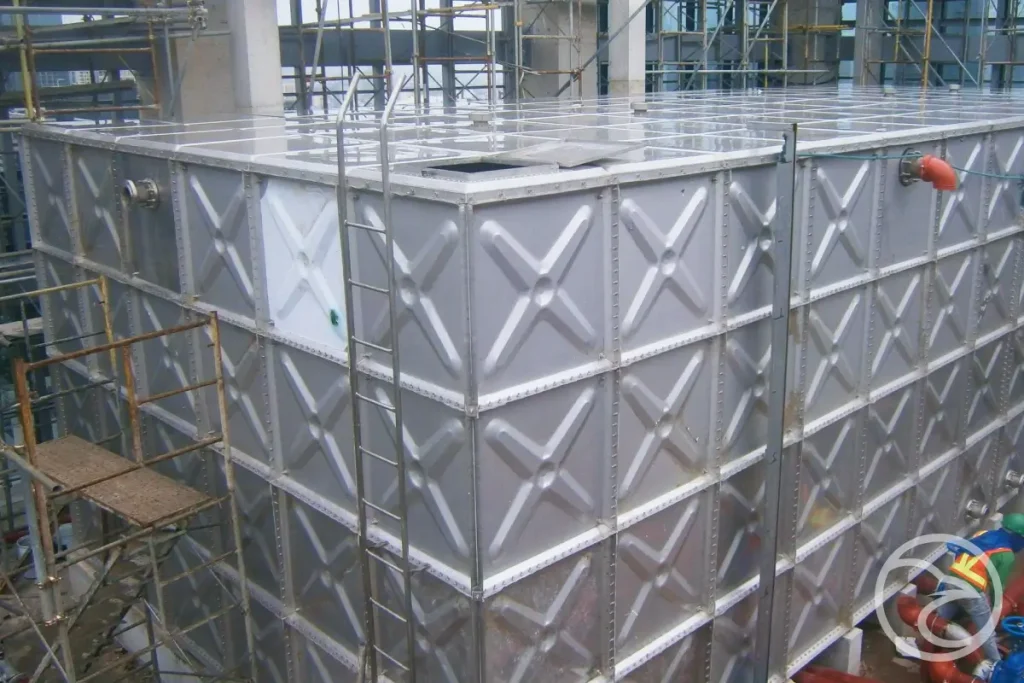
A stainless steel panel tank is a modular liquid storage system made from prefabricated stainless steel panels. Instead of manufacturing the entire tank as one structure, manufacturers produce individual panels. These panels are transported to the project site and assembled into the required tank configuration.
For facilities that require durable and flexible water storage, stainless steel panel tanks provide a modular solution with strong corrosion resistance and long-term performance.
The complete system typically includes:
- stainless steel wall panels
- base panels
- roof or cover components
- structural supports
- internal bracing where required
- gaskets and sealing components
- bolts and fasteners
- inlet and outlet connections
- overflow connections
- drains
- access hatches
- ladders and other accessories
Panel dimensions and configurations vary between manufacturers. The basic principle, however, remains the same. Multiple standardized components create one complete storage structure.
This modular design distinguishes panel tanks from many traditional welded or one-piece storage tanks.
Why are they Called Panel or Sectional Tanks?
The terms panel tank and sectional tank describe the same basic construction principle. A panel tank is built from separate prefabricated panels. A sectional tank is built from multiple sections that are assembled together.
For this reason, both terms are commonly used for modular water storage systems. The tank does not arrive at the site as one finished vessel. Instead, its components can be transported separately and assembled in the final installation area.
This feature is especially useful for buildings with restricted access. Large one-piece tanks may require cranes or extensive access during installation. Panel tanks can often be moved through smaller openings as individual components.
The system is then assembled inside the designated plant room or storage area. The sectional approach also provides considerable flexibility.
Tank dimensions can be selected around the available footprint, required capacity, and project constraints.
How are Stainless Steel Panel Tanks Constructed?
The construction starts with prefabricated stainless steel sheets or formed panels. Panels are manufactured to create the required strength and structural characteristics. They are then connected using a designed bolting and sealing system.
Depending on the system, internal or external reinforcement may support the tank walls. The base must also provide suitable structural support. Correct foundation design is important because stored water creates significant loads.
The final configuration depends on several factors:
- required storage volume
- available floor space
- available floor space
- water characteristics
- operating temperature
- site access
- seismic requirements
- structural loads
- applicable codes and project specifications
The manufacturer or engineer should evaluate these factors before finalizing the tank design.
Main Advantages of Stainless Steel Panel Tanks
Stainless steel combines the benefits of modular construction with strong corrosion resistance. This combination makes panel tanks suitable for many demanding storage applications.
High Corrosion Resistance
Corrosion resistance is one of stainless steel’s most important advantages. Stainless steel contains chromium, which helps create a protective passive surface layer. This layer helps protect the underlying material from corrosion under suitable conditions.
However, stainless steel is not completely immune to corrosion. Water chemistry, chlorides, temperature, fabrication quality, and grade selection all influence performance.
Selecting the correct stainless steel grade is therefore important.
Long Service Life
A properly designed stainless steel tank can provide a long operational life. The actual lifespan depends on the operating environment and maintenance program. Water chemistry also plays an important role.
Correct material selection can reduce deterioration and premature replacement. This makes stainless steel attractive for facilities considering long-term ownership costs.
Modular Construction
Panel tanks can be assembled directly at the installation location. This reduces many logistical problems associated with large prefabricated tanks. Individual components are easier to transport into restricted areas.
This can be particularly valuable for:
- mechanical rooms
- basements
- rooftops
- existing commercial buildings
- industrial facilities
- sites with limited crane access
Modular construction can also simplify tank replacement within existing facilities.
Flexible Tank Sizes
Panel systems provide considerable flexibility in tank configuration. Designers can adjust the tank footprint and height according to available space. This can help maximize storage capacity in constrained locations.
Capacity can range from relatively small systems to large commercial or industrial storage installations.
Hygienic Surface
Stainless steel has a smooth and non-porous surface. This makes the material relatively easy to inspect and clean. The surface does not require a conventional protective coating to provide its basic corrosion resistance.
This can be valuable in applications where cleanliness and water quality are important.
High Structural Strength
Stainless steel provides good mechanical strength. A correctly engineered panel system can handle significant hydrostatic loads.
Structural design must still consider tank dimensions, water depth, supports, and external loads.
Are there any Disadvantages?
Stainless steel panel tanks are not automatically the best option for every project. Several limitations should be considered.
Higher Initial Cost
Stainless steel generally has a higher material cost than some alternative tank materials. A stainless steel panel tank may therefore require greater initial investment. However, initial purchase price provides only part of the cost comparison.
Maintenance, expected service life, coatings, repairs, and replacement should also be considered.
Grade Selection Matters
Using an unsuitable stainless steel grade can create corrosion risks. High chloride levels are particularly important. Temperature and chemical exposure can also affect material performance.
For demanding environments, 316 stainless steel may provide better resistance than 304.
Installation Requires Specialist Knowledge
Panel tanks depend on correct assembly. Bolted connections, seals, structural supports, and fittings must be installed correctly. Poor installation can increase the risk of leakage or premature component failure.
Experienced installation teams are therefore important.
Stainless Steel Can Still Corrode
The name “stainless” does not mean corrosion is impossible. Certain environments can cause localized corrosion. Chloride exposure, contamination, poor fabrication, and unsuitable cleaning chemicals may affect the material.
Regular inspections remain important throughout the tank’s service life.
304 vs 316 Stainless Steel for Panel Tanks
Two common stainless steel grades used across storage and fabrication applications are 304 and 316. They share many characteristics but are not identical.
Understanding the difference helps with tank material selection.
What is 304 Stainless Steel?
304 is one of the most widely used austenitic stainless steel grades. It provides good general corrosion resistance and strong fabrication characteristics. For many water storage environments, 304 can provide an effective balance between performance and cost.
Typical characteristics include:
- good general corrosion resistance
- good strength
- good fabrication properties
- smooth and hygienic surfaces
- broad availability
- lower material cost than 316 in many cases
However, 304 may be less suitable for environments with significant chloride exposure. Project-specific water chemistry should always be evaluated.
What is 316 Stainless Steel?
316 stainless steel contains molybdenum in addition to chromium and nickel. The addition improves resistance to certain forms of localized corrosion. This is particularly relevant in chloride-containing environments.
316 may be considered for more demanding applications involving:
- elevated chloride exposure
- coastal environments
- certain industrial processes
- aggressive water conditions
- applications requiring additional corrosion resistance
The improved resistance normally comes with a higher material cost.
304 vs 316: Which is Better?
Neither grade is universally better. The correct choice depends on the storage conditions.
304 may be sufficient for many standard applications. 316 may provide additional protection where the environment is more corrosive.
Important selection factors include:
- chloride concentration
- water chemistry
- temperature
- external environmental exposure
- cleaning chemicals
- expected service life
- project budget
Material selection should follow engineering requirements and the specific storage environment. Choosing a more expensive grade without evaluating these conditions may provide limited additional value.
Choosing an insufficient grade can create much larger long-term costs.
Common Applications for Stainless Steel Panel Tanks
Stainless steel panel tanks can support a wide range of water storage requirements. Their corrosion resistance and modular construction make them especially useful in commercial and industrial facilities.
Potable Water Storage
Stainless steel is commonly considered for potable water storage systems. Its smooth surface can support hygienic storage when the tank is correctly designed and maintained.
Potable applications must still comply with applicable project requirements and regulations. Tank materials, seals, fittings, and other components should be appropriate for the intended water use.
For a closer look at hygiene, material selection, and water quality considerations, see stainless steel panel tanks for potable water storage.
Commercial Water Storage
Hotels, offices, hospitals, apartment buildings, and other facilities may require dedicated water storage. Panel tanks can provide high storage capacity without requiring a large one-piece vessel.
Their modular design is particularly useful for mechanical rooms with limited access.
Industrial Water Storage
Industrial sites may use stainless steel tanks for process or utility water. Applications vary significantly between facilities. Material compatibility must therefore be evaluated for the specific stored liquid.
The tank should not be assumed suitable for every industrial chemical or process fluid.
Fire Protection Water Storage
Some facilities require dedicated water reserves for fire protection systems. Sectional tank construction can provide large storage volumes where space or access is restricted. Fire protection applications must meet the applicable system design, engineering, and regulatory requirements.
Tank capacity and configuration should be determined by qualified fire protection professionals. For more details on design considerations, applications, and water storage requirements, see our guide to stainless steel tanks for fire protection systems.
Food and Beverage Facilities
Hygiene is especially important within food and beverage environments. Stainless steel is widely used throughout these industries because of its cleanable surface and corrosion resistance. Panel tanks can be considered where larger volumes of suitable water require storage.
Specific sanitary requirements depend on the process and intended use.
Healthcare and Institutional Facilities
Hospitals, schools, campuses, and other institutional properties may require reliable water storage. Stainless steel tanks can support these applications where durability and water quality are key priorities.
Rainwater and Water Reuse Systems
Stainless steel panel tanks can also be used within certain rainwater harvesting or reuse systems. Water characteristics should still be considered before choosing the stainless steel grade.
Filtration and treatment requirements depend on the intended use of the collected water.
Why is Stainless Steel Considered Hygienic?
Hygiene is one reason stainless steel is widely used in water and food-related industries. The material has a relatively smooth, non-porous surface. This provides several practical advantages.
The surface is easier to inspect than many rough or porous materials. Deposits can also be identified and removed during scheduled maintenance. Stainless steel does not depend on a conventional painted internal coating for its fundamental corrosion resistance.
This removes some coating-related maintenance concerns. However, the tank still requires appropriate maintenance. Sediment, biofilm, and contamination can occur in poorly maintained water storage systems regardless of tank material.
Good hygiene depends on the entire system.
Important factors include:
- tank design
- water turnover
- temperature
- water treatment
- inspection frequency
- cleaning procedures
- access design
- protection from external contamination
The material itself is only one part of hygienic water storage.
Maintenance Benefits of Stainless Steel Panel Tanks
Stainless steel tanks are often selected partly because of their maintenance characteristics. They do not normally rely on a painted protective surface in the same way as carbon steel tanks. This can reduce certain coating-related maintenance requirements.
The modular design can also make some repairs more localized. Individual components, seals, fasteners, or fittings may be accessible without replacing the complete tank.
Typical maintenance activities may include:
- visual inspections
- checking for leaks
- inspecting panel joints
- checking bolts and fasteners
- inspecting seals and gaskets
- examining internal surfaces
- checking corrosion-prone areas
- removing sediment
- cleaning and disinfection where required
- inspecting fittings and accessories
Maintenance requirements depend on the tank application and operating environment. Regular inspection helps identify small problems before they become major repairs. For practical inspection, cleaning, and preventive maintenance recommendations, see our stainless steel panel tank maintenance guide.
Stainless Steel Panel Tanks vs Other Tank Types
Different tank materials offer different advantages. The best choice depends on capacity, application, location, water chemistry, budget, and expected service life.
Stainless Steel vs Galvanized Steel Tanks
Galvanized steel tanks use a zinc coating to protect the underlying steel. They can provide a cost-effective solution for many water storage applications. Stainless steel achieves corrosion resistance through its alloy composition and passive surface.
It generally offers stronger resistance in many environments but usually costs more initially. Galvanized systems may be attractive when upfront cost is a major consideration. Stainless steel may be preferred when hygiene, corrosion resistance, or long-term durability carries greater importance.
For a closer comparison of corrosion resistance, maintenance, lifespan, and cost, see our guide to galvanized vs stainless steel water tanks.
Stainless Steel vs Glass-Fused-to-Steel Tanks
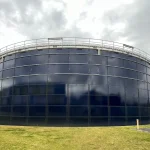
Glass-fused-to-steel tanks combine structural steel with a glass coating. They are commonly used for larger municipal and industrial storage applications. The coating provides corrosion protection but requires careful handling and installation.
Stainless steel does not rely on a glass coating. The preferred system depends heavily on tank capacity, application, site conditions, and project economics.
Stainless Steel vs Concrete Tanks
Concrete tanks can provide very large storage volumes. They are commonly used for major infrastructure and municipal applications. However, concrete structures can require significant site preparation and construction work.
Panel tanks generally provide faster modular assembly and easier installation in restricted locations. Concrete may remain more practical for some very large permanent storage systems.
Stainless Steel vs FRP or GRP Tanks
Fiber-reinforced plastic tanks are lightweight and corrosion resistant. They can also use sectional construction. FRP systems may offer a lower initial cost for some applications.
Stainless steel provides different mechanical, hygiene, temperature, and durability characteristics. The choice should reflect operating conditions rather than material cost alone.
For a detailed comparison of materials, durability, maintenance, and applications, see our guide to stainless steel tanks vs GRP panel tanks.
Can Stainless Steel Panel Tanks be Installed Indoors?
Yes. Indoor installation is one of the strongest applications for sectional tank systems.
Large conventional tanks can be difficult to move into existing buildings. Doorways, corridors, elevators, and structural openings can limit access. Individual tank panels are significantly easier to transport through restricted areas.
The complete tank can then be assembled inside the plant room. This makes panel tanks useful for retrofit projects. However, designers still need sufficient working space around the tank.
Access is necessary for assembly, inspection, maintenance, and future repairs.
How Long do Stainless Steel Panel Tanks Last?
There is no universal lifespan for every stainless steel tank. Service life depends on several interacting factors.
These include:
- stainless steel grade
- water chemistry
- chloride exposure;
- operating temperature
- fabrication quality
- installation quality
- maintenance
- environmental conditions
- inspection frequency
A correctly specified and maintained stainless steel system can provide long-term service. Poor material selection or neglected maintenance can shorten that life considerably.
For this reason, lifecycle performance should be considered during specification.
How Much do Stainless Steel Panel Tanks Cost?
There is no single price for a stainless steel panel tank. Costs vary considerably between projects. The required capacity is one major factor.
A larger tank requires more panels, structural components, fittings, and installation labor. Stainless steel grade also affects price.
316 stainless steel normally carries a higher material cost than 304. Tank configuration matters as well. Two tanks with the same capacity may have different prices because of their dimensions and structural requirements.
Other cost factors include:
- tank capacity
- 304 or 316 stainless steel
- panel thickness
- tank height
- structural reinforcement
- roof configuration
- access requirements
- ladders and platforms
- fittings and connections
- insulation
- seismic design requirements
- foundation requirements
- installation labor
- site accessibility
A simple price-per-gallon comparison can therefore be misleading. Project owners should compare complete installed systems rather than material prices alone.
Initial Cost vs Lifecycle Cost
Stainless steel often requires a larger initial investment than some alternatives. That does not necessarily mean it is the most expensive option over the tank’s full service life.
Lifecycle costs can include:
- initial tank purchase
- transportation
- installation
- inspection
- cleaning
- coating maintenance
- repairs
- downtime
- component replacement
- eventual tank replacement
A lower-cost tank can become more expensive if it requires frequent repairs or major coating work. Conversely, premium stainless steel may not be necessary for every storage environment.
The most economical solution is usually the system matched correctly to the application.
When does a Stainless Steel Panel Tank Make Sense?
Stainless steel panel tanks are particularly useful when projects combine demanding storage requirements with limited installation access.
They may be a strong option when:
- corrosion resistance is important
- hygienic storage is a priority
- long service life is required
- installation access is restricted
- modular construction provides logistical advantages
- custom tank dimensions are needed
- coating maintenance should be minimized
They may be less attractive where the project is driven almost entirely by minimum upfront cost. Alternative materials can provide adequate performance at a lower initial price in some environments.
Final Thoughts
Stainless steel panel tanks combine modular construction with the durability and corrosion resistance of stainless steel. Their sectional design allows individual panels to be transported and assembled directly at the project site. This makes them particularly valuable for commercial, industrial, and institutional facilities with restricted installation access.
Stainless steel also provides a smooth and hygienic surface suitable for many water storage applications. However, successful tank performance depends on correct specification. Tank capacity, water chemistry, environmental exposure, structural requirements, and stainless steel grade must all be considered.
304 stainless steel can provide an effective solution for many general applications. 316 stainless steel offers additional corrosion resistance for more demanding environments, particularly where chloride exposure is a concern.
Initial stainless steel tank costs may be higher than some alternatives. The comparison should therefore include maintenance requirements, service life, repair costs, and long-term reliability.