Choosing a water storage tank involves more than comparing capacity and initial cost. Materials affect durability, maintenance, installation, water compatibility, and long-term project costs.
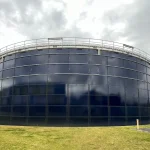
Glass-fused-to-steel tanks combine structural steel with a durable glass coating. This combination creates a strong, corrosion-resistant storage system. GFS tanks are widely considered for municipal, industrial, and commercial water storage projects.
However, every storage technology has advantages and limitations. Understanding glass-fused-to-steel tank pros and cons helps teams select the right solution for their project.
This guide covers:
- Key advantages of GFS tanks
- Potential limitations
- Common water storage applications
- Comparisons with alternative tank systems
- Important factors when sourcing a GFS tank
What is a Glass-Fused-to-Steel Tank?
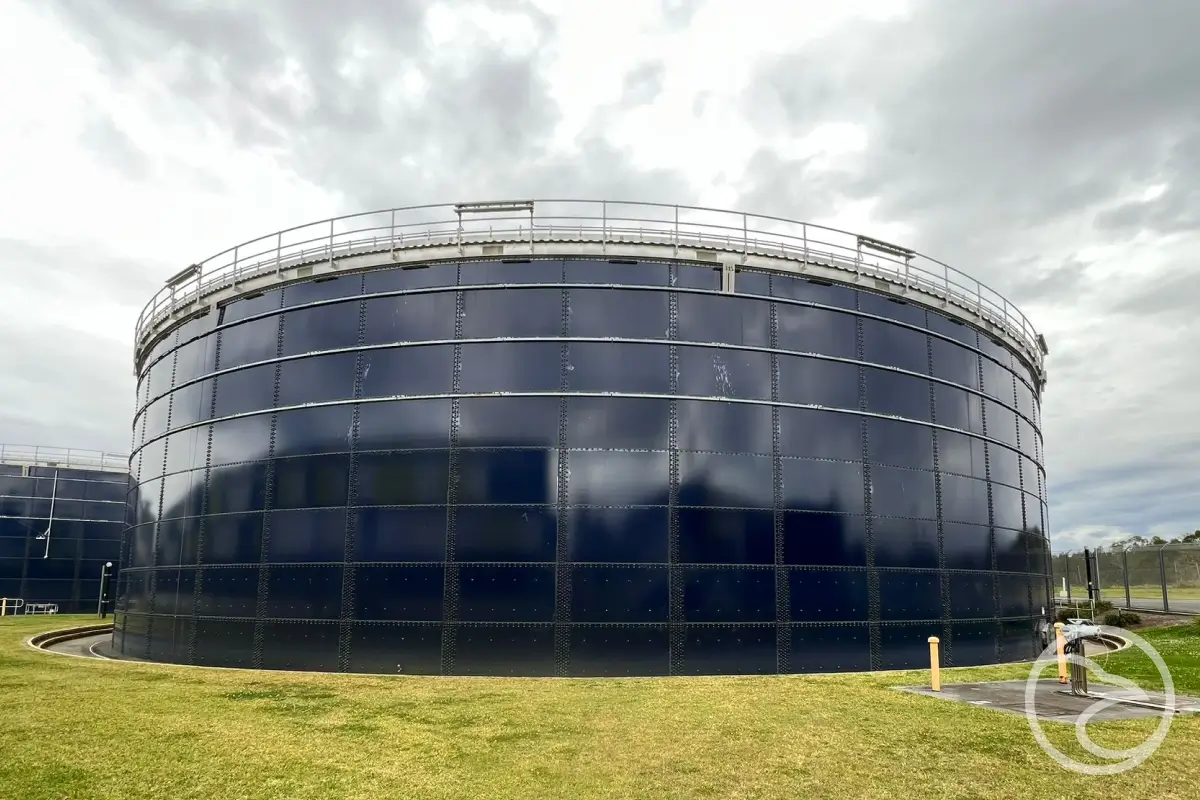
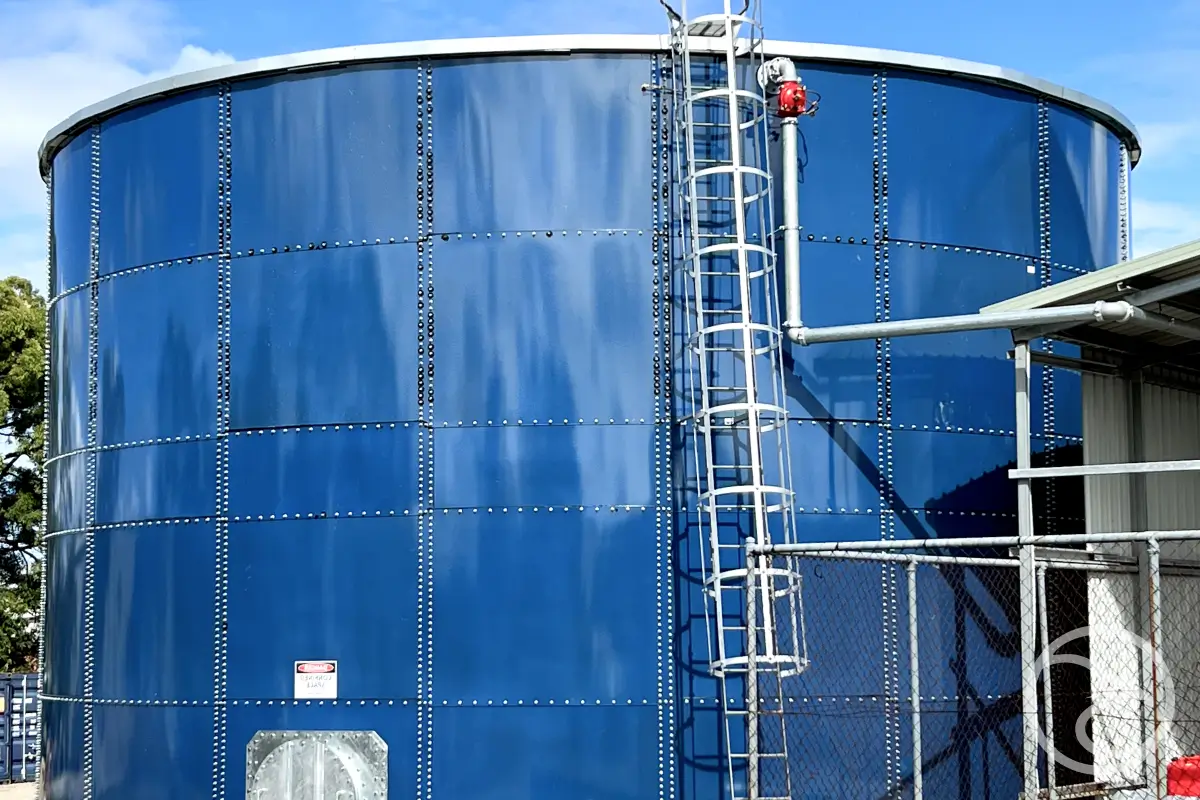
A glass-fused-to-steel tank consists of steel panels protected by a factory-applied glass coating. During manufacturing, glass is fused to the steel at high temperatures. The process creates a durable protective surface.
The two materials serve different purposes:
- Steel provides structural strength.
- Glass protects the steel surface.
- Bolted panels create the tank structure.
The finished panels are transported to the project site for assembly. This approach differs from field-welded tanks. Those systems often require more fabrication and coating work on-site.
Factory production also allows coating processes to occur under controlled manufacturing conditions. GFS technology can support potable water, wastewater, process water, and fire water storage applications.
Explore Raven American Tanks’ glass-fused-to-steel tank solutions for durable and scalable storage applications.
What are the Main Advantages of Glass-Fused-to-Steel Tanks?
GFS tanks offer several benefits for long-term water storage. Their biggest strengths involve corrosion protection, maintenance requirements, modular construction, and installation.
1. Strong Corrosion Resistance
Corrosion is a major consideration when selecting any steel water storage tank. The glass coating creates a protective barrier between the structural steel and stored liquid.
It also protects panel surfaces against external environmental exposure. This protection can be particularly valuable for long-term municipal and industrial water storage.
Key benefits include:
- Protection of the underlying steel
- Resistance to many environmental conditions
- A durable internal tank surface
- Reduced dependence on conventional protective paint systems
However, the glass coating must remain intact. Panels require proper handling during transportation, unloading, and installation.
Any damaged areas should be assessed and repaired using appropriate procedures.
2. Lower Recoating Requirements
Traditional coated steel tanks can require periodic surface preparation and recoating. These activities add maintenance costs throughout the tank’s service life.
GFS panels use a factory-fused glass surface instead of a conventional field-painted coating. Therefore, routine repainting is generally not required for the glass-coated panel surfaces.
That can reduce several long-term maintenance demands, including:
- Surface preparation
- Periodic repainting
- Coating-related shutdowns
- Labor associated with major recoating projects
This advantage can become significant when evaluating total ownership costs. However, GFS tanks are not maintenance-free.
Owners still need to inspect seals, connections, accessories, structural components, and other critical areas.
3. Factory-Controlled Coating
One important GFS advantage begins before the tank reaches the construction site. The glass coating is applied under controlled factory conditions.
This process reduces exposure to changing field conditions during coating application. Temperature, humidity, contamination, and weather can complicate field-applied coating work.
Factory production provides greater control over these variables. It can also support consistent surface preparation and coating quality.
However, manufacturing quality still matters. Project teams should evaluate the tank system and supplier rather than focusing only on coating type.
4. Modular Bolted Construction
GFS tanks commonly use modular bolted steel panels. Panels are manufactured before delivery and assembled at the project location.
This construction method offers several practical advantages:
- Easier transportation of individual panels
- Less field fabrication
- Reduced dependence on field welding
- Flexible tank dimensions
- Efficient construction planning
Modular construction can be particularly useful at sites with logistical constraints. It may also provide flexibility for certain future modifications.
However, future expansion should be considered during initial engineering. Foundation design and tank configuration can limit modification options.
5. Efficient On-Site Installation
Construction schedules matter for water infrastructure projects. Factory-finished GFS panels arrive ready for field assembly. This can reduce several activities normally completed at the installation site.
For example, extensive field coating is generally unnecessary after panel assembly. The bolted design also reduces field welding requirements.
Project schedules still depend on:
- Tank size
- Foundation readiness
- Site access
- Available equipment
- Crew experience
- Weather conditions
- Project complexity
Therefore, GFS construction should not automatically be considered fast in every situation. Its modular design simply removes several field-intensive manufacturing steps.
6. Multiple Water Storage Applications
GFS tanks can support many water and wastewater storage requirements.
Common applications include:
- Potable water storage
- Municipal water systems
- Wastewater storage
- Process water
- Industrial water
- Fire protection water
- Agricultural water storage
Each application can require different tank specifications. For example, potable water projects may have different certification requirements than wastewater projects.
Fire water storage may also involve specific design standards. Tank selection should always begin with the actual stored liquid and project requirements.
7. Smooth, Durable Interior Surface
The fused glass coating creates a smooth internal surface. This characteristic can support cleaning and maintenance activities.
The nonporous surface also separates stored water from the structural steel beneath it. However, tank surface quality represents only one part of water storage management.
Roof configuration, circulation, penetrations, access, and maintenance practices also affect system performance. For potable water projects, required certifications should be confirmed before procurement.
8. Potential Long-Term Value
Initial tank cost should never be evaluated alone. Project teams should consider the total cost of ownership.
That calculation may include:
- Initial tank supply
- Transportation
- Installation
- Inspections
- Routine maintenance
- Coating maintenance
- Repairs
- Operational downtime
GFS tanks can reduce some coating-related maintenance requirements. That can improve long-term value for projects with extended service expectations.
Actual life-cycle costs will vary between projects.
Site conditions, water chemistry, installation quality, and maintenance practices all influence long-term performance.
Planning a water storage project? Explore Raven American Tanks’ [glass-fused-to-steel tank solutions] for durable and scalable storage applications.
What are the Disadvantages of Glass-Fused-to-Steel Tanks?
GFS tanks have strong advantages, but they also require careful project planning. Several limitations should be considered before procurement.
1. Panels Require Careful Handling
The glass coating is durable, but significant impact can damage its surface. This makes correct handling important during transportation and installation.
Particular attention should be given to:
- Loading and unloading
- Panel storage
- Lifting procedures
- Installation equipment
- Panel edges
- Connection areas
Damage should be identified before the tank enters service. Exposed steel may become vulnerable to corrosion when protective surfaces are compromised.
2. Repairs Require Correct Procedures
GFS coating repairs differ from conventional steel repainting. Small damaged areas may be repairable using approved materials.
More significant damage can require additional evaluation or panel replacement. This makes after-sales technical support an important procurement consideration.
Buyers should understand repair procedures before selecting a supplier. They should also consider future access to replacement components.
3. Initial Cost can be Higher
GFS tanks may not offer the lowest initial price for every project. Some alternative storage systems can have lower upfront costs.
However, purchase price tells only part of the story. A useful cost comparison should include:
Initial cost + installation + maintenance + repairs + expected coating work + operational disruption.
A lower-cost tank can become more expensive if maintenance requirements increase over time. Likewise, a premium system may not provide enough value for every application.
The expected project life should influence this decision.
4. Engineering Remains Project-Specific
Modular construction does not mean GFS tanks are standardized products for every site. Water storage tanks remain engineered structures.
Design considerations can include:
- Required capacity
- Tank diameter and height
- Wind loads
- Seismic loads
- Roof configuration
- Foundation conditions
- Stored liquid
- Nozzle requirements
- Ladders and platforms
- Piping connections
Local codes can also affect the final configuration. Early technical coordination can prevent costly changes later.
5. Bolted Connections Depend on Installation Quality
Bolted construction provides important advantages, but assembly quality matters. Connections, sealants, bolts, and panel alignment all contribute to tank performance.
Improper assembly can increase the risk of leaks or maintenance issues. The project scope should clearly establish responsibility for installation.
It should also address testing, inspection, documentation, and commissioning requirements.
6. GFS is not Ideal for Every Project
No tank material works best in every situation. Project duration, budget, site access, and stored liquids can change the preferred solution.
Alternative systems may include:
- Epoxy-coated bolted steel tanks
- Field-welded steel tanks
- Concrete tanks
- Other application-specific storage systems
The goal should not be choosing GFS simply because of its advantages. The goal is choosing the system that best matches project requirements.
GFS Tank Pros and Cons at a Glance
For project teams comparing technologies, the main considerations can be summarized quickly.
| Advantages | Potential Limitations |
|---|---|
| Strong corrosion resistance | Coating requires careful handling |
| Reduced repainting requirements | Damage requires appropriate repair |
| Factory-applied coating | Initial cost may be higher |
| Modular bolted construction | Engineering remains project-specific |
| Reduced field fabrication | Installation quality matters |
| Multiple water applications | Not suitable for every project |
| Smooth internal surface | Supplier support is important |
| Potential long-term value | Life-cycle value varies by application |
The balance between these factors depends on each project’s priorities. For long-term infrastructure, maintenance and durability may carry greater weight than initial price.
GFS Tanks vs. Other Water Storage Systems
GFS tanks are rarely evaluated in isolation. Project teams often compare them with epoxy-coated steel, welded steel, or concrete storage systems.
GFS vs. Epoxy-Coated Steel Tanks
Both systems use structural steel panels. The primary difference is the protective coating. GFS uses glass fused to steel during manufacturing.
Epoxy tanks use a protective polymer coating system. GFS can be attractive when reducing future recoating requirements is a major priority. Epoxy systems may offer economic advantages for certain projects.
The final decision should consider expected service conditions and maintenance strategy.
GFS vs. Field-Welded Steel Tanks
Field-welded tanks provide considerable design flexibility. However, they can require more fabrication and coating activities at the project location.
GFS tanks arrive as factory-coated panels for bolted assembly. This reduces field welding and coating requirements.
The difference can affect construction schedules, site logistics, and future maintenance.
GFS vs. Concrete Tanks
Concrete tanks remain common across water infrastructure projects. They can provide strong structural performance and large storage capacities.
However, concrete construction involves different site requirements. Formwork, curing, cracking, waterproofing, and construction schedules may become important considerations.
GFS tanks use factory-manufactured components and modular field assembly. The better option depends on project conditions rather than one universal material advantage.
Choosing between different tank materials requires understanding their performance and project suitability. See our GRP vs. GFS tank comparison for more details.
When does a GFS Tank Make Sense?
GFS tanks deserve strong consideration when long-term durability is a major project objective. They can also suit projects seeking to reduce future coating maintenance.
A GFS system may be particularly attractive when:
- Long service is expected
- Corrosion protection is important
- Repainting should be minimized
- Modular construction benefits the site
- Field welding should be reduced
- Construction scheduling is important
- Future maintenance costs influence procurement
However, these factors should be evaluated together. One advantage rarely determines the best tank technology by itself.
What Should Buyers Consider when Sourcing a GFS Tank?
Selecting GFS technology is only one part of procurement. The next challenge is sourcing the correct system.
Define the Storage Requirement
Start with the required storage capacity and application. Determine whether the tank will store potable, process, wastewater, or fire protection water.
Future capacity requirements should also be considered.
Confirm Site Conditions
Provide accurate information about the installation location.
Important site factors can include:
- Wind conditions
- Seismic requirements
- Temperature
- Elevation
- Foundation conditions
- Site access
- Available construction space
These factors can influence engineering and logistics.
Identify Applicable Standards
Standards should be established before final procurement. AWWA D103 addresses factory-coated bolted carbon steel tanks for water storage.
Other requirements may apply depending on the application and project location. Potable water projects may require drinking water certifications.
Fire protection projects can involve additional standards and approvals. Project specifications should define these requirements clearly.
Review the Complete Supply Scope
A tank quotation should be evaluated beyond its headline price. Buyers should understand exactly what the supplier provides.
Review items such as:
- Tank panels
- Roof system
- Fasteners and sealants
- Nozzles and connections
- Ladders and platforms
- Accessories
- Engineering documentation
- Freight
- Installation support
- Testing requirements
This prevents unexpected scope gaps during construction.
Evaluate Supplier Support
The supplier’s role can extend beyond delivering tank panels. Technical support can become important during design, delivery, installation, and commissioning.
Buyers should evaluate the supplier’s ability to support the complete project process. Clear communication is particularly important for complex municipal and industrial projects.
The Bottom Line
Glass-fused-to-steel tanks offer a strong combination of structural performance and corrosion protection. Their factory-applied coating can reduce conventional repainting requirements.
Modular construction can also simplify transportation and reduce certain field activities. However, GFS tanks require proper handling, engineering, installation, and maintenance.
They may also have higher initial costs than some alternative systems. The best decision depends on the complete project.
Consider capacity, application, site conditions, standards, maintenance expectations, and total ownership costs.
For procurement teams, supplier capabilities deserve equal attention. Reliable supply, engineering coordination, logistics, and technical support can directly influence project success.
Need a reliable GFS tank supply partner? Contact Raven American Tanks to discuss your upcoming water storage project.