Elevated water storage tanks are a familiar part of many water distribution systems. These structures store water above ground level and use elevation to support water pressure. They can serve communities, industrial sites, residential developments, and other facilities requiring dependable water storage.
An elevated tank is more than a container placed on a supporting structure. Its height, capacity, materials, location, and configuration all influence how the system performs.
Understanding these factors helps explain why elevated water storage remains important in modern water infrastructure. This guide explains elevated water tanks, their operation, common styles, design factors, construction, uses, and maintenance needs.
What is an Elevated Water Storage Tank?
An elevated water storage tank is a reservoir positioned above the surrounding ground level. The tank may sit on columns, a pedestal, a tower, or another engineered support structure. Its elevated position allows gravity to move water through a connected distribution system.
The terms used for these structures can vary between regions and industries.
Common terms include:
- Elevated water tank
- Elevated storage tank
- Elevated water reservoir
- Elevated storage reservoir
- Water tower
- Elevated water storage structure
These terms can describe similar systems, although individual designs and configurations may differ. The defining feature is the storage of water at a useful elevation above the distribution area.
This elevation creates hydraulic head within the system. As a result, stored water can help maintain pressure when demand changes.
How Does Elevated Water Storage Work?
Elevated water storage relies heavily on gravity. Water is pumped into the reservoir until it reaches the required operating level. The stored water gains potential energy because of its elevation.
When water enters the distribution network, gravity helps create pressure. Greater elevation generally produces greater static pressure at lower points within the system. This principle reduces dependence on continuous pumping for maintaining distribution pressure.
Pumps are still usually required to refill the tank. However, they do not necessarily need to match every short-term change in water demand. The tank can store water during periods of lower demand.
Stored water can then enter the network when demand increases. This relationship helps balance differences between water supply and water consumption.
Why are Water Storage Tanks Elevated?
The primary reason is pressure. A ground-level reservoir stores water but provides limited pressure through elevation alone. An elevated tank creates additional hydraulic head.
This can support pressure across the connected distribution network. Elevation can also help water systems respond to changing demand. Water consumption rarely remains constant throughout the day.
Demand may increase sharply during mornings, evenings, industrial operations, or emergency events. An elevated reservoir provides stored water that can respond to these fluctuations.
Depending on system design, elevated storage can provide several functions:
- Support normal distribution pressure
- Balance hourly changes in water demand
- Provide storage during peak consumption
- Reduce rapid changes in pump operation
- Provide emergency water reserves
- Support fire-flow requirements
- Improve operational flexibility
The exact role depends on the wider water distribution system. Not every elevated tank performs every function.
Main Components of an Elevated Water Tank
Although elevated tanks vary considerably, most include several basic structural and hydraulic components.
Storage Container
The container holds the stored water. Its capacity depends on system demand, operational requirements, and emergency storage needs.
Tank geometry can vary considerably between elevated tank styles.
Support Structure
The support structure raises the storage container above ground level. It must carry the weight of the tank, stored water, and other imposed loads.
Support configurations include columns, pedestals, shafts, and tower structures.
Foundation
The foundation transfers structural loads into the ground. Its design depends on soil conditions, tank dimensions, structural configuration, and environmental loads.
Inlet and Outlet
Water enters and leaves through dedicated piping. Some designs use separate inlet and outlet arrangements.
Others may use combined piping depending on hydraulic requirements.
Overflow System
An overflow provides a controlled path for excess water. It helps prevent uncontrolled spilling if water rises above the intended operating level.
Ventilation
Vents allow air movement as water levels rise and fall. Proper ventilation also helps protect the stored water from external contamination.
Access Systems
Elevated tanks require safe access for inspection and maintenance. Access arrangements can include ladders, platforms, hatches, walkways, and internal access systems.
The exact arrangement depends on tank design and applicable safety requirements.
Common Elevated Tank Styles and Types
There is no single elevated tank style suitable for every application. Tank configuration depends on required capacity, height, site conditions, structural requirements, and other project factors.
Multi-Column Elevated Tanks
These tanks use several structural columns to support the water container. Bracing typically connects the columns and provides additional structural stability.
Multi-column structures are one of the most recognisable elevated tank configurations. Their open support arrangement also makes many structural elements visible from ground level.
Pedestal Elevated Tanks
Pedestal tanks use a central supporting shaft rather than multiple exposed columns. The water container sits above this pedestal.
The enclosed support structure can also provide protected space for piping and access systems. Different container shapes can be combined with pedestal structures.
Composite Elevated Tanks
Composite tanks combine different construction materials within one structure. A common approach uses a concrete support structure with a steel water container.
This allows different materials to perform specific structural functions.
Spheroid and Similar Tank Forms
Some elevated tanks use rounded or curved storage containers. Their geometry can help distribute structural forces through the container.
These distinctive structures are frequently associated with municipal water systems.
Smaller Elevated Storage Tanks
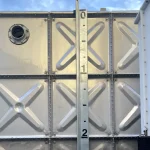
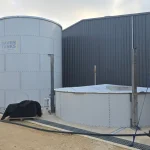
Not every elevated water tank is a large municipal tower. Smaller tanks may be installed on engineered stands or support frames.
These systems can serve rural, residential, agricultural, or smaller commercial applications.
Their basic operating principle remains similar. Water is stored above its point of use to create useful hydraulic head.

Elevated Water Tank Design Considerations
The design of an elevated water tank involves several interconnected factors. Engineers must consider both the storage requirements and the supporting structure.
Storage Capacity
Capacity depends on the purpose of the reservoir and the water system it supports.
Design calculations may consider:
- Average water consumption
- Peak demand
- Emergency storage
- Fire-flow requirements
- Operational storage
- Expected future demand
Larger capacity does not automatically mean better system performance. Storage must match the hydraulic and operational requirements of the network.
Tank Elevation
Elevation is fundamental to system pressure. The required height depends on the pressure needed within the distribution area. Local terrain also matters.
A tank serving low-lying areas may operate differently from one serving elevated locations.
Structural Loads
An elevated tank must safely resist numerous forces.
These may include:
- Tank self-weight
- Stored water weight
- Wind loads
- Seismic loads
- Snow or environmental loads
- Loads associated with access equipment
- Dynamic effects
The applicable loads depend on the tank location and relevant engineering requirements.
Site Conditions
Ground conditions influence foundation design. Available land can also affect tank geometry and support configuration.
Designers may consider access roads, nearby infrastructure, property boundaries, and existing utilities.
Water Quality
Water quality is another important design consideration. Poor circulation can create areas where water remains stored for excessive periods.
System configuration should therefore consider turnover and mixing. Tank covers, vents, openings, and access points also require suitable protection against contamination.
Access and Safety
Inspection and maintenance requirements should be considered during design. Workers may need access to the exterior, roof, internal surfaces, piping, and structural components.
Safe access becomes especially important because elevated tanks involve significant working heights.
How are Elevated Water Tanks Constructed?
Elevated water tank construction varies according to design, material, capacity, and site conditions. However, projects generally follow several broad stages. The process begins with site investigation and engineering design.
Ground conditions may need assessment before the foundation system is finalised. Foundation construction then creates a stable base for the structure. The supporting tower, pedestal, or columns are constructed above the foundation.
The tank container can then be assembled or erected. Construction methods depend heavily on tank style and material. Some steel components may be fabricated before arriving at the site.
Other components may require substantial field assembly. Concrete structures can involve reinforcement, formwork, concrete placement, and curing stages.
Piping and hydraulic components are also installed during construction. Access systems, vents, overflow arrangements, and safety equipment must be incorporated into the completed structure.
Protective systems may be applied where required. The completed tank generally requires inspection, testing, cleaning, and commissioning before normal operation.
Materials Used for Elevated Water Storage Tanks
Material selection affects structural performance, maintenance requirements, service conditions, and construction methods.
Steel
Steel is widely used for elevated storage containers and structural components. It provides high strength and allows many different tank geometries.
Steel surfaces require suitable corrosion protection. The specific protective system depends on environmental exposure and stored water requirements.
Reinforced Concrete
Concrete is commonly used for structural supports and some storage structures. Its characteristics make it suitable for substantial load-bearing applications.
Concrete structures still require inspection because deterioration can develop over time.
Composite Construction
Composite designs use more than one primary construction material. For example, a tank may combine a concrete pedestal with a steel container.
The approach allows designers to use different material properties within one structure. Material selection should always reflect the complete engineering requirements rather than one factor alone.
Projects requiring flexible capacity and configuration can benefit from panel water storage tanks designed for diverse water storage applications.
Elevated Water Tanks vs Ground-Level Storage Tanks
Elevated and ground-level tanks both store water, but they interact differently with distribution systems. The most obvious difference is elevation. Elevated storage uses tank height to create hydraulic pressure.
Ground-level storage provides much less pressure through elevation. Therefore, ground storage systems may depend more heavily on pumping arrangements.
The structures also have different engineering requirements. Elevated tanks require substantial support systems capable of carrying water high above the ground. Ground tanks transfer their loads more directly into foundations.
Site requirements can differ as well. An elevated structure uses vertical space but becomes a prominent feature of the surrounding area.
Ground tanks can occupy substantial horizontal space, particularly at larger capacities. Neither configuration is universally appropriate. Selection depends on hydraulic requirements, available land, terrain, capacity, infrastructure, and project constraints.
Where are Elevated Water Storage Tanks Used?
Elevated water storage appears in many different settings.
Municipal Water Systems
Municipal systems are perhaps the most familiar application. Elevated reservoirs can help balance demand while supporting pressure across distribution networks.
They can also contribute to emergency and fire-flow storage.
Industrial Facilities
Industrial sites may require stored water for processes, utility services, fire protection, or operational reserves. The exact function depends on the facility.
Rural Water Systems
Rural systems can use elevated tanks where gravity-fed distribution provides practical operational benefits. Tank size and configuration depend on local demand.
Commercial and Institutional Sites
Large facilities may require dedicated water storage for specific operational or emergency purposes. Examples can include campuses and other large developments.
Residential Elevated Water Tanks
Residential elevated water tanks are generally much smaller than municipal water towers. They may serve individual properties or groups of buildings. A tank can be positioned on a suitable structure to provide gravity-fed water.
However, useful pressure requires sufficient difference between water level and the point of use. Tank weight is also significant. Even relatively modest water volumes create substantial structural loads.
Supporting structures and foundations therefore require appropriate design.
Advantages and Limitations of Elevated Water Storage
Elevated storage provides several practical benefits within correctly designed water systems.
Potential advantages include:
- Gravity-supported water pressure
- Storage for changing demand
- Reduced dependence on immediate pump response
- Emergency water availability
- Potential fire-flow storage
- Operational flexibility
- Greater ability to balance supply and demand
However, elevated tanks also introduce important challenges.
Potential limitations include:
- Significant structural requirements
- Complex foundations
- Exposure to wind and environmental conditions
- Difficult access at height
- Inspection requirements
- Corrosion or material deterioration
- Visual impact
- Specialised maintenance requirements
These factors explain why elevated storage requires careful engineering throughout its service life.
Inspection and Maintenance of Elevated Water Tanks
Elevated tanks operate in demanding environments. Their structural and water-containing components can deteriorate over time. Regular inspection helps identify developing conditions before they become more significant.
Inspection programs may examine:
- Exterior tank surfaces
- Interior surfaces
- Structural supports
- Protective coatings
- Corrosion
- Concrete deterioration
- Roof condition
- Ladders and platforms
- Access hatches
- Piping
- Overflow systems
- Vents
- Foundations
Internal tank conditions are especially important because they are not visible during routine external observation. Sediment can accumulate within storage tanks. Coatings can also deteriorate or become damaged.
Maintenance requirements depend on material, age, environmental exposure, water conditions, and tank design. There is no single maintenance schedule suitable for every elevated reservoir.
Professional tank inspection services can help identify deterioration early and support safer, more reliable water storage.
The Role of Elevated Storage in Water Distribution
Elevated storage should be considered part of a larger water system. A tank does not operate independently from pumps, pipes, valves, and water demand. Its capacity determines how much water can be stored.
Its elevation influences available hydraulic pressure. Its location affects how stored water interacts with the distribution network. Pump operation determines when and how the tank is refilled.
Consumer demand determines when stored water moves back into the system. These elements must work together.
A well-designed elevated storage system can help balance variations between water production and consumption. This balancing function is one reason elevated reservoirs remain common across water distribution networks.
Understanding Elevated Water Storage
Elevated water storage combines a simple physical principle with substantial engineering. Water stored at height contains potential energy that can support pressure and distribution through gravity. However, successful elevated storage requires much more than simply raising a tank above ground.
Capacity, elevation, structural design, materials, foundations, water quality, access, and maintenance all affect long-term performance. Different elevated tank styles address these requirements in different ways.
Understanding these fundamentals makes it easier to see why elevated water reservoirs remain an important part of water infrastructure.