Industrial facilities require reliable water storage systems. Choosing the right tank design affects performance, maintenance, and long-term costs. Many businesses compare modular tanks vs panel tanks before installation. Both options support commercial and industrial applications.
However, they differ in structure, flexibility, and maintenance requirements. Understanding these differences helps facility managers make informed decisions.
What are Modular Tanks?
Modular tanks consist of separate components assembled on-site. Each section connects to create a larger storage system. These tanks are popular in industrial environments because they allow flexible sizing. Facilities can expand storage capacity without replacing the entire system.
Modular tanks also simplify transportation. Smaller sections are easier to deliver to restricted or remote locations.
Many industries use modular tanks for:
- industrial water storage
- fire protection systems
- wastewater management
- rainwater harvesting
Their adaptable design suits facilities with changing operational needs.
When selecting storage systems for demanding environments, businesses often review how to choose the right industrial panel tank for harsh environments to compare installation conditions and material performance.
What are Panel Tanks?
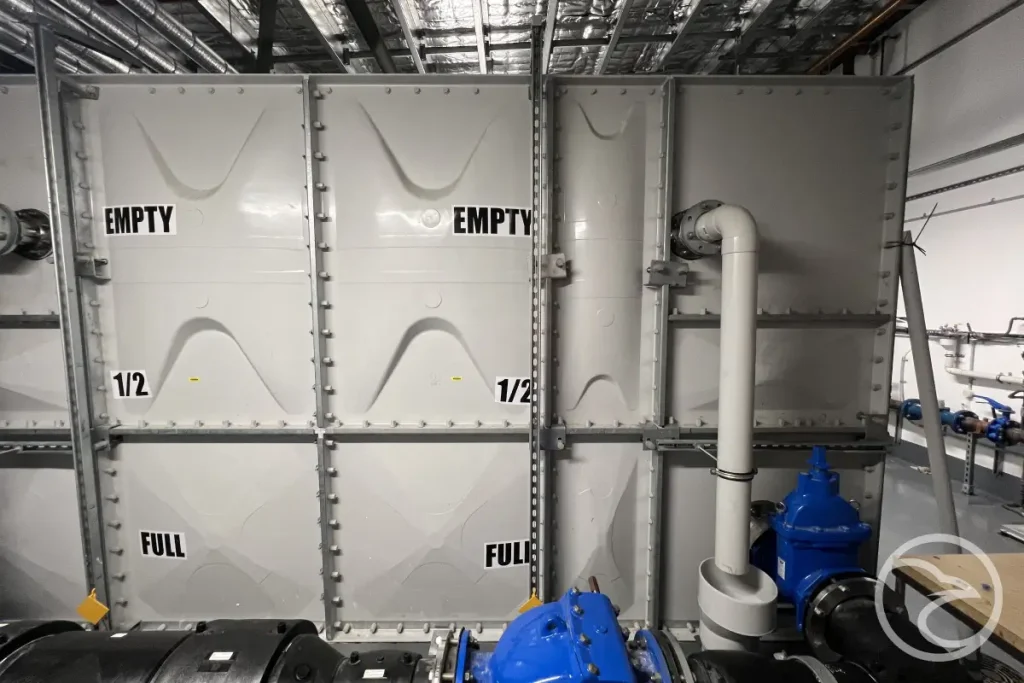
Panel tanks are built using prefabricated panels connected together. These panels form the walls, floor, and roof of the tank.
Manufacturers commonly produce panel tanks using:
- galvanized steel
- stainless steel
- GRP materials
Industrial panel tanks are widely used in commercial and industrial facilities. They provide reliable water storage for large-scale operations. The sectional design allows efficient assembly on-site. This feature makes panel tanks suitable for locations with limited access.
Industrial panel tanks are known for:
- durability
- corrosion resistance
- structural strength
- long service life
They are often selected for projects requiring high-capacity storage systems.
Main Differences Between Modular and Panel Tanks
Although the terms are sometimes used interchangeably, important differences exist.
Design Structure
Modular tanks focus on expandable configurations. Their systems prioritize flexibility and future growth.
Panel tanks emphasize structural panel construction. The design supports strength and stability for industrial applications.
Installation Process
Both tank types require on-site assembly. However, modular tanks generally offer easier future expansion. Additional sections can increase storage capacity with minimal disruption.
Panel tanks may require more planning during initial installation. Their structure often supports permanent large-scale storage systems.
Material Options
Modular tanks use various materials depending on the application.
Panel tanks commonly feature steel or GRP panels. These materials improve corrosion resistance and durability. Facilities handling aggressive environments often prefer stainless steel panel systems.
Which Option Offers Better Flexibility?
Modular tanks provide excellent scalability. Facilities can modify storage capacity as operational demands change. This advantage supports industries experiencing growth or seasonal fluctuations.
Panel tanks also offer customization options. However, major expansions may involve additional engineering considerations.
For businesses expecting future expansion, modular systems may provide better flexibility. For long-term fixed storage, panel tanks often deliver stronger structural performance.
Maintenance Requirements
Proper maintenance improves the lifespan of any industrial tank system. Modular tanks require routine inspections for seals, joints, and connections. Preventive maintenance helps reduce leak risks. Panel tanks also need regular inspections.
Facilities should monitor:
- panel integrity
- corrosion
- coating conditions
- internal cleanliness
Maintenance planning becomes especially important in industrial environments with constant usage. Many operators also review expert tips for maximizing the lifespan of your water tank to improve maintenance schedules and reduce long-term repair costs.
Performance in Industrial Applications
Both systems perform well in industrial settings. The best choice depends on operational priorities.
Modular Tanks Work Best For:
- expanding facilities
- temporary projects
- remote locations
- scalable storage systems
Panel Tanks Work Best For:
- permanent industrial installations
- high-capacity storage
- fire water systems
- facilities requiring maximum durability
Panel tanks often support heavy-duty industrial applications more effectively. Their rigid structure handles demanding environmental conditions and long operational cycles.
Cost Considerations
Installation costs vary depending on tank size, materials, and site conditions. Modular tanks may reduce transportation expenses because components ship separately. Future expansion costs are also typically lower.
Panel tanks can involve higher initial investment costs. However, their durability often reduces long-term replacement expenses.
Businesses should evaluate:
- installation requirements
- maintenance costs
- expansion plans
- expected lifespan
The lowest upfront cost does not always provide the best long-term value.
Choosing the Right Tank for Your Facility
Selecting between modular tanks and panel tanks depends on operational needs. Facilities requiring future scalability may benefit from modular systems. Operations prioritizing durability and large-scale storage often choose panel tanks.
Environmental conditions also influence the decision. Corrosive environments may require specialized materials and coatings.
Before installation, businesses should assess:
- storage capacity requirements
- available installation space
- maintenance capabilities
- future expansion plans
Working with experienced tank specialists helps ensure the right system selection.
Final Thoughts
Modular tanks and panel tanks both support efficient industrial water storage. Modular systems offer flexibility and simplified expansion. Panel tanks provide exceptional durability and structural reliability.
Understanding the differences between modular tanks vs panel tanks helps businesses select the most suitable storage solution. The right tank system improves operational efficiency, reduces maintenance risks, and supports long-term industrial performance.