Tank refurbishment projects often begin with a detailed inspection. Before repairs, coating replacement, or structural upgrades can be planned, facility owners need a clear understanding of tank condition.
Understanding how tank inspections support refurbishment decisions helps facility owners prioritize maintenance and plan restoration work more effectively. Inspections provide the information needed to evaluate deterioration, identify risks, and determine the most effective refurbishment strategy. Without proper assessment, important issues may remain hidden until they become costly problems.
Why Tank Inspections Matter
Storage tanks face continuous exposure to environmental and operational stresses. Over time, these conditions can affect structural integrity, protective coatings, and overall performance.
Tank inspections help facility owners:
- Identify deterioration early
- Evaluate structural condition
- Detect hidden defects
- Prioritize maintenance activities
- Support long-term asset planning
Regular assessments reduce the risk of unexpected failures and costly downtime.
What Tank Inspections Evaluate
A comprehensive inspection examines multiple components throughout the tank system.
Inspectors typically evaluate:
- Tank walls and shell condition
- Roof structures
- Floors and foundations
- Welds and connections
- Internal surfaces
- Signs of corrosion
The goal is to develop a complete understanding of the tank’s condition. For a detailed breakdown of inspection items, review our industrial tank inspection checklist.
Detecting Corrosion Before it Spreads
Corrosion is one of the most common reasons tanks require refurbishment. Even minor corrosion can expand over time if left untreated.
During inspections, professionals evaluate:
- Surface corrosion
- Pitting
- Material loss
- Coating deterioration
- Corrosion around welds and fittings
Understanding corrosion severity helps determine whether repairs or refurbishment are necessary. Learn more about the most common tank corrosion causes and how they affect storage tank performance.
Identifying Structural Problems
Not all structural issues are visible during routine operations. Inspections help identify defects that may affect long-term reliability and safety.
Common findings include:
- Cracking
- Settlement-related movement
- Distortion
- Deformation
- Weld deterioration
Early identification helps prevent additional damage and supports safer operation.
Assessing Coating Condition
Protective coatings serve as a barrier against moisture and corrosive elements. When coatings begin to fail, deterioration often accelerates.
Inspectors look for:
- Peeling coatings
- Blistering
- Cracking
- Surface wear
- Areas of exposed metal
Coating assessments help determine whether refurbishment should include recoating or surface restoration.
Determining the Extent of Deterioration
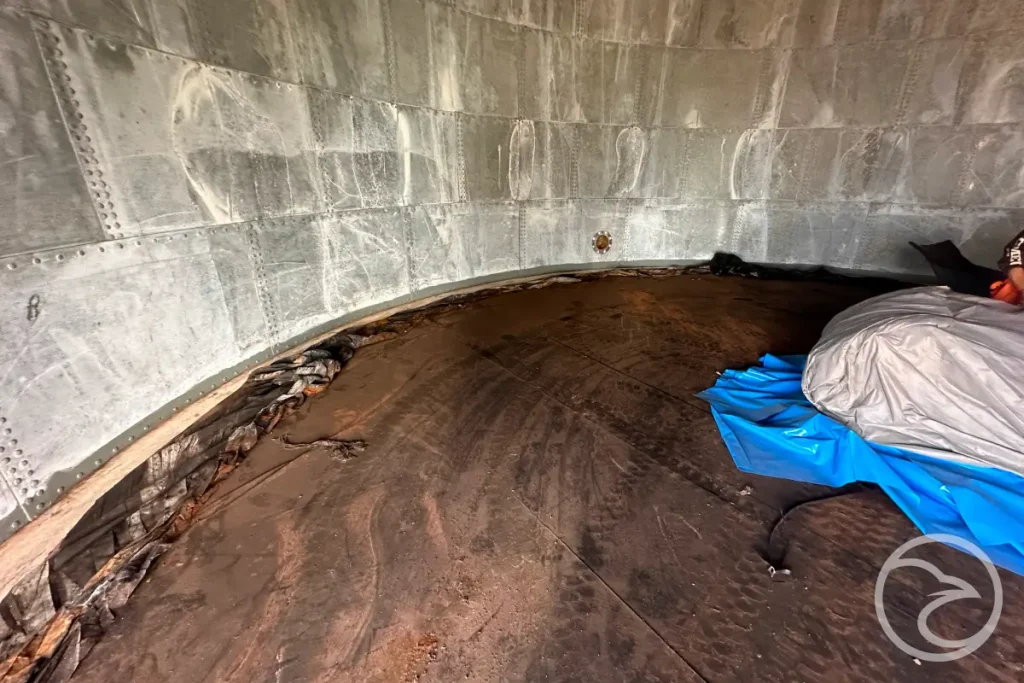
One of the main goals of an inspection is determining how much deterioration has occurred.
Inspection findings help answer important questions:
- Is refurbishment feasible?
- Are repairs sufficient?
- Is replacement necessary?
- Which components require attention?
Accurate assessments support informed maintenance decisions.
Supporting Refurbishment Planning
Inspection results help create realistic refurbishment plans.
The information collected can be used to:
- Prioritize repairs
- Estimate project scope
- Allocate budgets
- Schedule maintenance
- Reduce operational disruptions
Better planning often leads to more efficient project execution and lower long-term costs.
When Should a Tank be Inspected?
Inspections should be performed throughout a tank’s lifecycle.
Common situations include:
- Before refurbishment projects
- After severe weather events
- Following operational incidents
- During routine maintenance programs
- When deterioration is suspected
Regular evaluations help prevent minor issues from becoming major structural concerns. If you notice corrosion, leaks, coating failure, or structural defects, review the common signs a tank needs refurbishment before planning corrective action.
How Inspections Influence Refurbishment Decisions
Inspection findings often determine whether refurbishment is the most practical option. Many tanks remain structurally sound despite localized deterioration.
When this occurs, refurbishment can restore performance and extend service life without full replacement. A professional tank refurbishment assessment uses inspection data to identify the most effective restoration strategy.
Conclusion
Tank inspections play an essential role in refurbishment planning. They help identify corrosion, structural defects, coating failures, and other forms of deterioration before work begins.
By understanding a tank’s actual condition, facility owners can make better maintenance decisions, reduce risks, and maximize asset life.
Understanding how tank inspections support refurbishment decisions helps organizations plan maintenance activities more effectively and avoid unexpected repair costs.