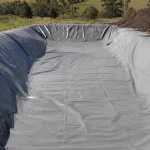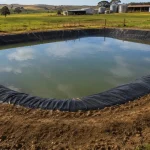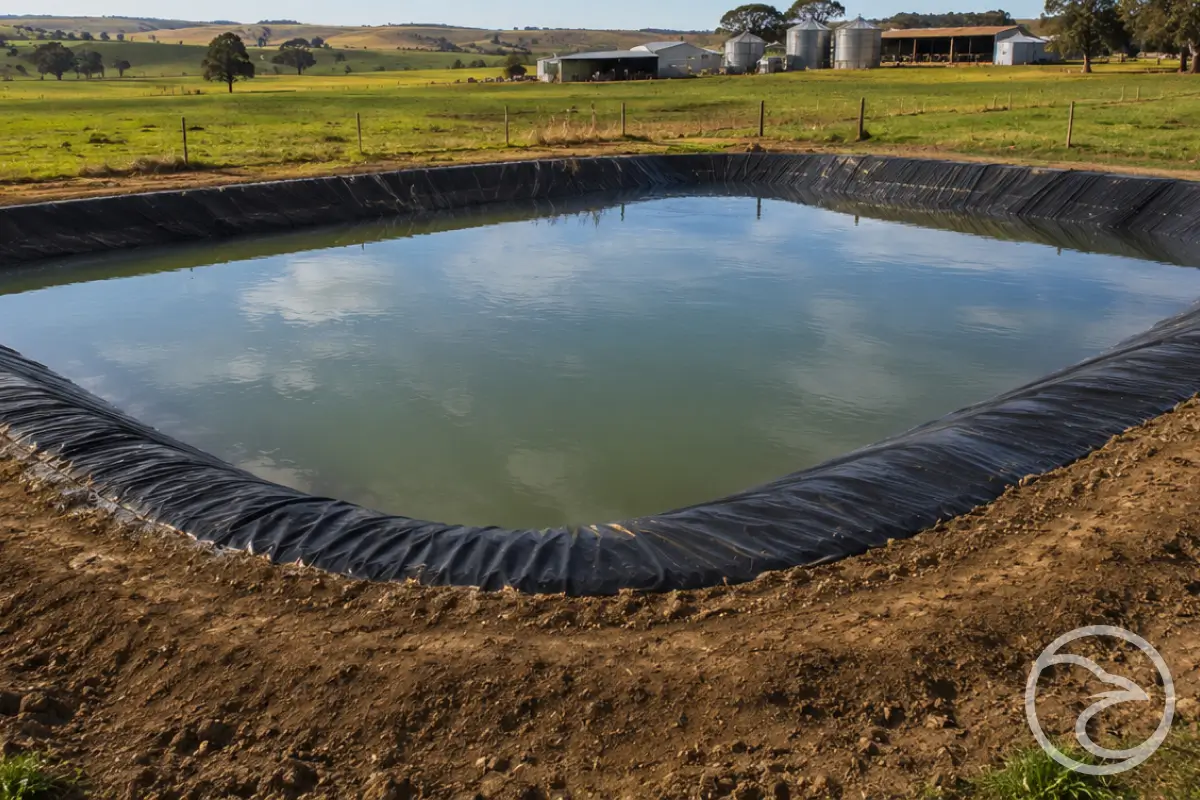
Choosing the right pit liner material can make a significant difference in how well a containment system performs. Some liners work best for industrial wastewater. Others are better suited for water storage, irregular pits, or temporary containment.
The most common options include HDPE, LLDPE, PVC, and reinforced polyethylene. Each material offers different advantages and limitations.
For example, HDPE provides strong chemical resistance, while LLDPE offers greater flexibility. PVC can fit complex shapes, and reinforced liners provide additional strength for certain applications. But which one is right for your project?
This guide explains pit liner materials, their common applications, advantages, disadvantages, and the factors that matter when choosing one.
What Materials are Used for Pit Liners?
Pit liners are protective membranes placed inside excavated pits or containment areas. They help prevent stored liquids from leaking into surrounding soil. Most pit liners are made from flexible or semi-flexible synthetic materials.
Four common options are:
HDPE (High-Density Polyethylene): A strong material commonly used for industrial containment and wastewater applications.
LLDPE (Linear Low-Density Polyethylene): A more flexible material suitable for irregular pits and areas with limited ground movement.
PVC (Polyvinyl Chloride): A flexible material often considered for water storage and custom-shaped containment areas.
Reinforced Polyethylene (RPE): A lightweight material with added reinforcement for improved strength and tear resistance.
Although these materials serve similar purposes, they are not interchangeable. Their suitability depends on the liquid being stored, pit conditions, and expected service life.
HDPE Pit Liners: Best for Industrial and Long-Term Containment
HDPE is one of the most widely used materials for industrial pit liners. It is a strong polyethylene membrane that creates a barrier between stored liquids and the surrounding ground.
HDPE is particularly useful when chemical resistance and long-term durability are important.
Where are HDPE Pit Liners Used?
HDPE liners are commonly used in:
Industrial wastewater pits: To contain wastewater before treatment or disposal.
Process water containment: To store water used in industrial operations.
Mining facilities: To contain certain process liquids and wastewater.
Industrial runoff collection: To prevent contaminated runoff from entering surrounding soil.
Water storage pits: To retain large volumes of water over extended periods.
HDPE is often selected for projects with demanding operating conditions. However, the specific liquid must be compatible with the selected membrane.
Advantages of HDPE Pit Liners
1. Strong chemical resistance
HDPE resists many industrial chemicals, including certain acids and alkalis. This makes it useful for containment applications involving chemically demanding liquids.
2. Good long-term durability
Properly specified HDPE can provide long service life under suitable operating conditions. It also performs well in many outdoor environments when manufactured with appropriate UV protection.
3. High mechanical strength
HDPE offers strong resistance to tensile forces and many types of mechanical stress.
4. Low permeability
HDPE helps reduce liquid seepage through the membrane. This is particularly important for containment systems designed to protect surrounding soil.
Disadvantages of HDPE Pit Liners
The main limitation of HDPE is its relatively low flexibility. It can be more difficult to fit around sharp corners, complicated shapes, or irregular surfaces.
HDPE also expands and contracts as temperatures change. Without proper design, these movements can create wrinkles or unwanted stress.
When should you choose HDPE? HDPE is often a strong option for industrial pits requiring chemical resistance and long-term containment.
For irregular shapes or areas experiencing movement, a more flexible material may be preferable.
LLDPE Pit Liners: Best for Flexible and Irregular Containment Areas
LLDPE is another polyethylene material used in pit lining systems. It shares several characteristics with HDPE but offers greater flexibility.
This makes LLDPE useful when the pit has an irregular shape or requires a membrane that can accommodate limited movement.
Where are LLDPE Pit Liners Used?
Common applications include:
Irregularly shaped pits: Where the liner must follow curves, slopes, or corners.
Industrial water containment: Where flexibility and liquid retention are both important.
Wastewater collection areas: Where the stored liquid is chemically compatible.
Containment basins: Where the membrane must fit complex surfaces.
Sites with limited ground settlement: Where some flexibility can help accommodate movement.
LLDPE can be easier to position around complicated pit features. However, proper ground preparation remains essential.
Advantages of LLDPE Pit Liners
1. Greater flexibility
LLDPE bends and stretches more easily than HDPE. This helps the material follow irregular surfaces without creating excessive tension.
2. Better accommodation of movement
LLDPE can tolerate certain types of deformation more readily than stiffer membranes. This may be useful where limited ground movement is expected.
3. Easier fitting around complex shapes
Its flexibility can simplify placement around slopes, corners, and transitions.
4. Good resistance to many liquids
LLDPE is compatible with many water containment applications and selected industrial liquids. However, chemical compatibility depends on the specific formulation.
Disadvantages of LLDPE Pit Liners
LLDPE generally has lower stiffness than HDPE. This may make HDPE more suitable for certain applications requiring higher tensile stiffness.
LLDPE also requires careful evaluation when exposed to demanding chemical conditions. When should you choose LLDPE?
LLDPE is worth considering when flexibility is a major requirement. It can be particularly useful for irregular pits and containment areas with complex geometries.
PVC Pit Liners: Best for Custom Shapes and Water Containment
PVC is a flexible plastic material used in many liquid containment applications. One of its main advantages is its ability to fit complicated shapes.
PVC membranes can also be fabricated into larger panels before installation. This makes them useful for certain custom containment projects.
Where are PVC Pit Liners Used?
PVC may be used for:
Water storage pits: For retaining water in compatible operating conditions.
Agricultural water containment: For selected irrigation and water management applications.
Custom-shaped pits: Where the membrane must follow complicated surfaces.
Collection basins: For compatible water and wastewater applications.
Temporary containment: Where a suitable PVC formulation meets the project requirements.
PVC is especially useful when the shape of the containment area makes installation challenging.
For projects requiring flexible containment materials, PVC tank liners may provide a suitable alternative to rigid lining systems.
Advantages of PVC Pit Liners
1. Excellent flexibility
PVC can follow corners, slopes, and uneven surfaces. This makes it useful for pits with complicated shapes.
2. Custom fabrication options
PVC membranes can be fabricated into panels suited to particular dimensions. This may reduce some field fabrication requirements.
3. Easy handling
Depending on thickness and formulation, PVC can be relatively easy to position and adjust.
4. Suitable for many water containment applications
PVC can provide effective liquid containment when the membrane formulation matches the operating environment.
Disadvantages of PVC Pit Liners
Not every PVC liner is suitable for industrial chemicals. Chemical resistance depends heavily on the membrane formulation.
Some PVC products also contain plasticizers that may change over time. Extended exposure to sunlight or certain chemicals can affect long-term performance.
When should you choose PVC? PVC may be a practical option for water containment and pits with complicated shapes.
However, its chemical compatibility and outdoor durability must be verified before selection.
Reinforced Polyethylene Pit Liners: Best for Strength and Handling
Reinforced polyethylene liners combine polymer layers with a reinforcing structure. The reinforcement adds strength while keeping the material relatively lightweight.
These liners are often used when handling, tear resistance, or prefabrication are important.
Where are Reinforced Pit Liners Used?
Applications may include:
Temporary containment pits: For short-term liquid storage.
Industrial water containment: Where the selected membrane meets operating requirements.
Secondary containment areas: For additional protection against liquid releases.
Large prefabricated liner systems: Where fewer field seams may be beneficial.
Specialized containment projects: Where tensile strength and low weight are priorities.
Reinforced liners are available in different constructions. Their performance depends on the materials used in both the membrane and reinforcement.
Advantages of Reinforced Polyethylene Pit Liners
1. High tensile strength
The reinforcement helps the membrane resist pulling forces.
2. Good tear resistance
Certain reinforced constructions provide strong resistance to tearing.
3. Lightweight construction
Some reinforced liners are easier to transport and handle than heavier alternatives.
4. Prefabrication potential
Large panels may be manufactured before delivery. This can reduce the number of field seams in certain projects.
Disadvantages of Reinforced Polyethylene Pit Liners
Not all reinforced liners offer the same chemical resistance or service life. Some products are designed primarily for temporary applications.
Their puncture resistance also depends on the complete membrane construction. When should you choose reinforced polyethylene?
Reinforced liners may be suitable when lightweight handling, tensile strength, and prefabrication are important. Always confirm that the specific product supports the intended liquid and exposure conditions.
HDPE vs. LLDPE vs. PVC vs. Reinforced Polyethylene
The following table provides a simple comparison of common pit liner materials.
| Material | Main Advantage | Main Limitation | Common Applications |
|---|---|---|---|
| HDPE | Chemical resistance and durability | Less flexible | Industrial wastewater, process water, long-term containment |
| LLDPE | Flexibility and adaptability | Lower stiffness | Irregular pits, complex containment areas |
| PVC | Flexibility and custom fabrication | Formulation-dependent chemical resistance | Water storage, custom-shaped pits |
| Reinforced PE | Strength and lightweight handling | Performance varies by construction | Temporary containment, prefabricated systems |
This comparison is a starting point rather than a final material specification. The best option depends on the conditions inside and around the pit.
Choosing suitable pit liners is an important step in creating an effective industrial containment system.
How to Choose the Right Pit Liner Material
Choosing a pit liner becomes easier when you focus on practical project requirements. Start by answering the following questions.
1. What Liquid will the Pit Contain?
This is the most important question. Different liquids interact with liner materials in different ways.
For example:
Clean water: Several materials may be suitable, depending on exposure conditions.
Industrial wastewater: HDPE or another chemically compatible membrane may be appropriate.
Process water: Selection depends on temperature, contaminants, and chemical composition.
Chemically aggressive liquids: Chemical compatibility must be confirmed before choosing a liner.
Never assume a liner is suitable simply because it is waterproof. A membrane must also resist the specific substances present in the stored liquid.
2. Is the Pit Regular or Irregular in Shape?
Pit geometry affects material selection. A simple rectangular pit may accommodate a relatively stiff liner.
A pit with curves, multiple slopes, or complicated corners may benefit from greater flexibility.
For example:
HDPE may suit straightforward containment geometries.
LLDPE may be easier to fit around irregular surfaces.
PVC may offer advantages for custom-shaped containment areas.
The final choice must also account for liquid compatibility and mechanical requirements.
3. Will the Liner be Exposed to Sunlight?
Some pit liners remain exposed to sunlight for years. Others are covered or protected from direct UV exposure. Outdoor conditions can affect material durability.
HDPE products designed for exposed applications often include UV stabilizers. PVC and other membranes may require specialized formulations for long-term sunlight exposure.
Always check whether the selected product is suitable for exposed installation.
4. How Long will the Liner be Used?
A temporary containment pit has different requirements from a permanent industrial system. Short-term applications may prioritize handling and installation efficiency.
Long-term applications require careful consideration of chemical resistance, aging, and mechanical performance. Ask whether the system will operate for months, years, or decades.
This helps narrow the available material options.
5. What are the Ground Conditions?
The surface beneath the liner can affect its performance. Sharp rocks, uneven soil, and construction debris may create puncture risks.
Unstable ground may also cause movement or settlement.
Consider:
Soil type and stability.
Presence of sharp objects.
Expected ground movement.
Pit slopes and corners.
Need for protective geotextile layers.
Even a strong membrane can fail when placed over an unsuitable surface.
6. What Thickness does the Pit Liner Need?
Pit liner thickness is commonly measured in mils in the United States. One mil equals 0.001 inch.
Here are several common thickness references:
| Thickness | Equivalent in Inches |
| 30 mil | 0.030 inches |
| 40 mil | 0.040 inches |
| 60 mil | 0.060 inches |
| 80 mil | 0.080 inches |
| 100 mil | 0.100 inches |
Thicker liners may provide greater resistance to certain mechanical stresses. However, thickness alone does not determine performance.
A reinforced membrane and an unreinforced membrane may behave differently at the same thickness. The required thickness depends on the material, ground conditions, liquid, and expected loads.
Which Pit Liner Material is Best for Different Applications?
Different containment applications place different demands on liner materials. The following examples illustrate how material selection may vary.
Industrial Wastewater Containment
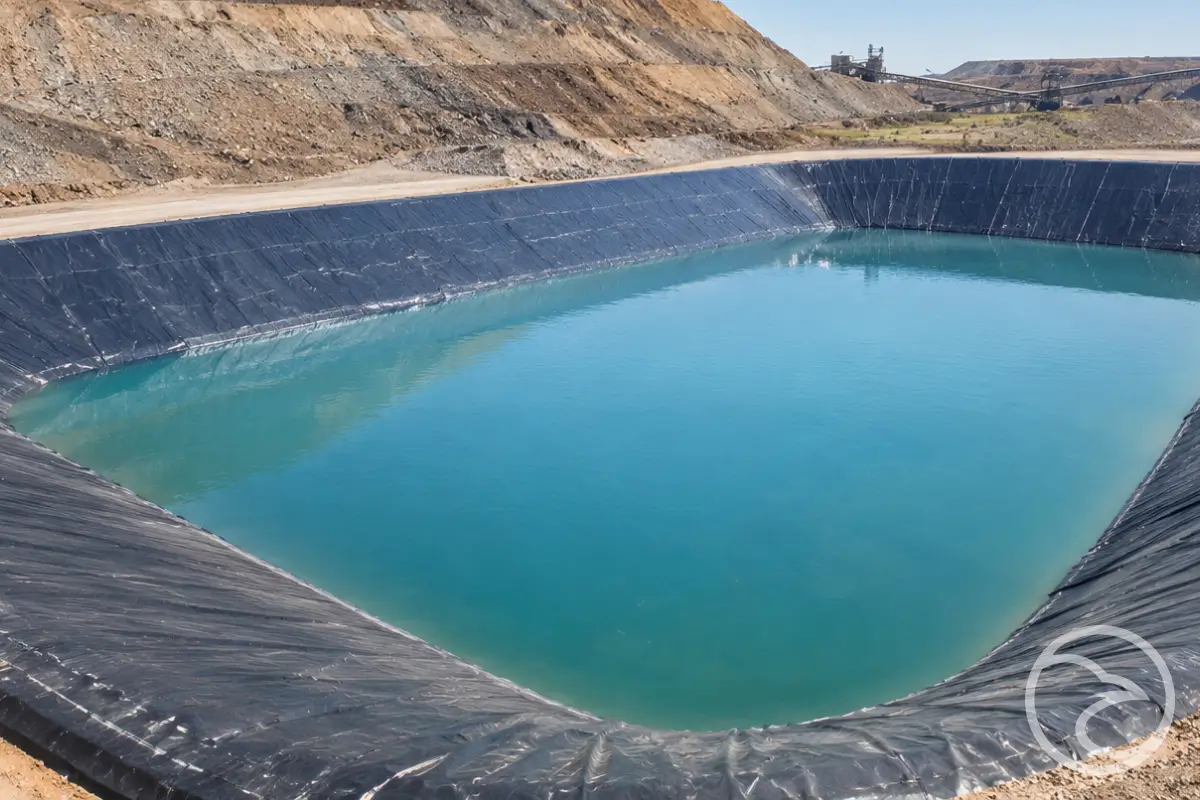
Industrial wastewater may contain chemicals, oils, detergents, or other contaminants. Chemical compatibility is therefore a major concern.
HDPE is commonly considered because of its broad chemical resistance. LLDPE may also be suitable when additional flexibility is needed.
The wastewater composition should guide the final decision.
Process Water Storage
Process water is used in manufacturing and other industrial operations. Its composition and temperature can vary significantly.
HDPE and LLDPE are common options for many process water applications. However, the best choice depends on the actual operating conditions.
Agricultural Water Storage
Agricultural pits may store irrigation water or other compatible liquids. Flexibility, sunlight exposure, and expected service life are important considerations.
PVC, LLDPE, and HDPE may all be suitable for certain applications. Material selection should reflect the specific water quality and site conditions.
Irregularly Shaped Containment Pits
Complex pit shapes can make membrane placement more challenging. LLDPE and PVC offer greater flexibility than conventional HDPE.
This may help the membrane follow corners, slopes, and transitions. However, flexible materials still require proper support and suitable connections.
Temporary Liquid Containment
Temporary containment systems may prioritize portability and efficient handling. Certain reinforced polyethylene liners can be useful for these applications.
Their lightweight construction may simplify transportation and placement. However, temporary use does not eliminate chemical compatibility or mechanical performance requirements.
Long-Term Industrial Containment
Long-term containment systems require materials that can withstand years of exposure. HDPE is frequently considered for demanding industrial environments.
LLDPE and other materials may also provide suitable long-term performance. The choice depends on liquid chemistry, environmental exposure, and structural conditions.
Common Mistakes when Choosing Pit Liner Materials
Several common mistakes can lead to poor material selection.
Choosing the Cheapest Material
A lower initial price does not always mean lower long-term costs. Premature replacement or leakage can create additional expenses.
Assuming Every Waterproof Liner is Chemically Resistant
Waterproofing and chemical compatibility are different properties. A membrane suitable for water may not resist industrial chemicals.
Ignoring Pit Shape
Stiffer materials may be difficult to fit around complicated surfaces. Flexibility should be considered alongside other performance requirements.
Selecting Thickness without Considering Material Properties
A thicker membrane is not automatically stronger in every application. Material composition, reinforcement, and supporting conditions also matter.
Overlooking Outdoor Exposure
Sunlight and temperature changes can affect liner performance. The material must be suitable for the expected environment.
Ignoring Manufacturer Specifications
Different products within the same material category can perform differently. Always review the technical information for the specific membrane.
Explore common pit liner installation mistakes to see how improper preparation and poor seam quality affect liner performance.
Conclusion
Choosing the right pit liner material starts with understanding the containment application. HDPE is a strong option for many industrial environments requiring chemical resistance and durability. LLDPE offers greater flexibility for irregular pits and areas where limited movement is expected. PVC provides flexible containment options for water storage and complex shapes.
Reinforced polyethylene can offer advantages for lightweight handling and specialized containment applications. Each material has strengths and limitations.
The most reliable choice is the one that matches the stored liquid, pit geometry, environmental conditions, and expected service life.