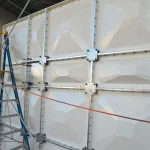
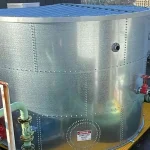
Modern water and industrial storage tanks play a critical role in infrastructure safety, yet maintaining safe operating conditions inside these assets remains a constant challenge. Limited visibility, confined spaces, structural complexity, and water quality risks all contribute to operational uncertainty. As a result, many facilities are increasingly relying on drone technology for tank safety operations to improve situational awareness while reducing risk to personnel.
Rather than replacing traditional inspection programs, drone technology supports ongoing safety operations by providing real-time visual data, improving hazard identification, and enabling informed decision-making throughout a tank’s lifecycle.
The Role of Drone Technology in Tank Safety Operations
Drone technology used in tank safety operations typically includes aerial drones (UAVs) and underwater remotely operated vehicles (ROVs). These systems are designed to operate in environments that are difficult or unsafe for human entry, allowing operators to observe internal and external tank conditions without draining tanks or exposing workers to confined-space hazards.
In safety-focused applications, drones are used to support operational oversight rather than formal inspection outcomes. Their primary function is to enhance visibility, document conditions, and identify emerging risks before they escalate into safety incidents or service disruptions.
Key Safety Risks Addressed by Drone Technology
Storage tanks present several inherent safety risks, including structural deterioration, corrosion, sediment accumulation, and contamination threats. Drone technology helps mitigate these risks by enabling:
- early identification of surface deformation or material degradation
- detection of coating breakdown or corrosion-prone areas
- monitoring of sediment buildup that may affect water quality or flow
- observation of internal components without confined-space entry
By reducing the need for manual access, drone-based monitoring significantly lowers the likelihood of falls, oxygen-deficient environments, and accidental contamination.
Supporting Operational Decision-Making
One of the most valuable contributions of drone technology in tank safety operations is its ability to support informed operational decisions. High-resolution visual records allow facility managers to compare conditions over time, track changes, and prioritize maintenance activities based on actual risk indicators rather than assumptions.
Consistent visual documentation also improves communication between engineering teams, safety managers, and asset owners. When everyone has access to the same objective data, decisions related to maintenance planning, cleaning schedules, or temporary operational adjustments become clearer and more defensible.
To enhance visibility and internal awareness, many facilities complement surface-level monitoring with advanced underwater monitoring technologies that provide detailed visual data from within active tank systems.
Safety Operations vs. Inspections: Understanding the Difference
It is important to distinguish tank safety operations from formal inspections. While inspections are structured assessments performed at defined intervals, safety operations focus on continuous risk awareness and operational control.
Drone technology fits naturally into this safety-oriented role by providing ongoing insight between inspection cycles. This approach allows facilities to address developing concerns early, improving overall safety outcomes without altering regulatory inspection schedules.
In practice, many facilities enhance safety operations by integrating drone-based monitoring with remotely operated underwater systems that allow detailed observation of internal tank conditions without interrupting normal operations.
Limitations and Practical Considerations
Although drone technology significantly improves safety operations, it is not without limitations. Extremely turbid water, reflective interior surfaces, or heavily obstructed tank geometries may reduce image clarity. In such cases, drone data may need to be supplemented with other monitoring methods to ensure adequate visibility.
Effective use of drone technology also depends on proper operational planning, trained operators, and clear data management practices to ensure that collected information remains useful over time.
The Future of Drone-Assisted Tank Safety
As drone systems continue to evolve, their role in tank safety operations is expected to expand. Advances such as AI-assisted image analysis, automated anomaly detection, and digital tank mapping will further enhance risk awareness and long-term asset management.
By integrating drone technology into safety operations, facilities can move toward a more proactive, data-driven approach to tank management—one that prioritizes personnel safety, asset reliability, and operational resilience.