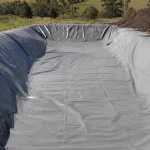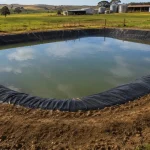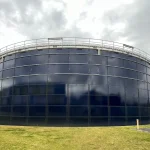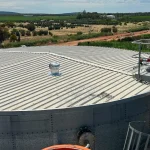
Fiberglass-reinforced materials are widely used in engineering and construction due to their balanced combination of strength, durability, and adaptability. In water storage and containment applications, these materials are valued for their ability to perform reliably under long-term exposure to moisture and environmental stress. Understanding the properties of fiberglass-reinforced materials helps explain why they are commonly selected for demanding storage environments.
What are Fiberglass-Reinforced Materials?
Fiberglass-reinforced materials are composite structures made by combining glass fibers with a binding matrix, usually a resin. The glass fibers provide mechanical strength, while the surrounding matrix holds the fibers in place and distributes applied loads evenly across the structure.
This combination results in a material that behaves differently from traditional metals or concrete. Instead of relying on mass for strength, fiberglass-reinforced materials achieve performance through structural composition.
Strength-to-Weight Ratio
One of the defining properties of fiberglass-reinforced materials is their high strength-to-weight ratio. Despite being relatively lightweight, they can withstand significant mechanical loads. This characteristic makes them suitable for large structures where reducing overall weight is beneficial without compromising stability.
Lower weight also simplifies handling and assembly while reducing stress on supporting foundations or adjacent structures.
Resistance to Moisture and Corrosion
Fiberglass-reinforced materials perform well in environments where constant exposure to water is unavoidable. Unlike metals, they do not corrode when exposed to moisture. This resistance helps maintain structural integrity over extended periods, especially in water storage systems where internal surfaces remain in contact with water.
The non-reactive nature of these materials also limits degradation caused by chemical interactions with stored liquids.
Dimensional Stability Under Environmental Changes
Environmental conditions such as temperature fluctuations and humidity can cause many materials to expand, contract, or weaken. Fiberglass-reinforced materials demonstrate strong dimensional stability, allowing them to maintain shape and performance across varying conditions.
This stability reduces stress on joints and connections, contributing to consistent long-term behavior in storage applications.
Surface Characteristics and Maintenance Considerations
Another important property of fiberglass-reinforced materials is their surface behavior. Smooth, non-porous surfaces limit the accumulation of sediment and biological growth. This characteristic supports better internal hygiene in water storage environments.
Reduced surface interaction also simplifies routine inspection and cleaning, helping maintain predictable performance without intensive maintenance requirements.
Structural Flexibility and Load Distribution
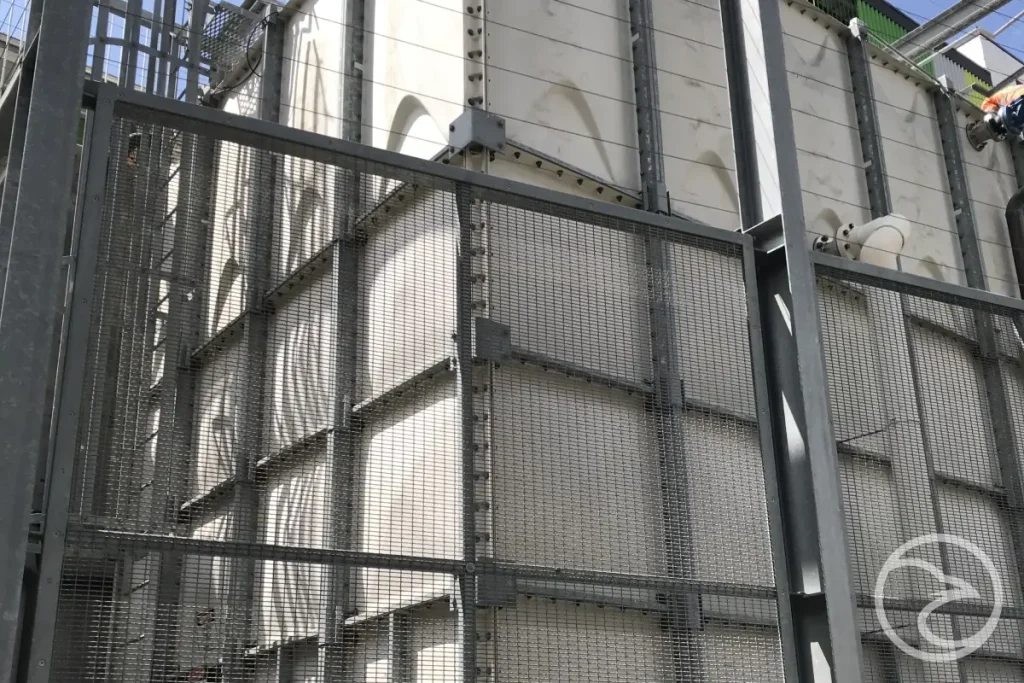
Fiberglass-reinforced materials offer controlled flexibility rather than rigidity. This allows them to absorb minor movement or vibration without cracking. Instead of concentrating stress at specific points, loads are distributed across the material structure.
This behavior is particularly valuable in large containment systems where internal pressure and external forces may vary over time.
Longevity and Performance Consistency
When properly designed, fiberglass-reinforced materials retain their properties for extended service periods. Resistance to corrosion, stable mechanical behavior, and limited environmental degradation all contribute to long-term performance consistency.
Rather than relying on frequent repairs, systems built with these materials are designed to maintain their functional properties under continuous operation.
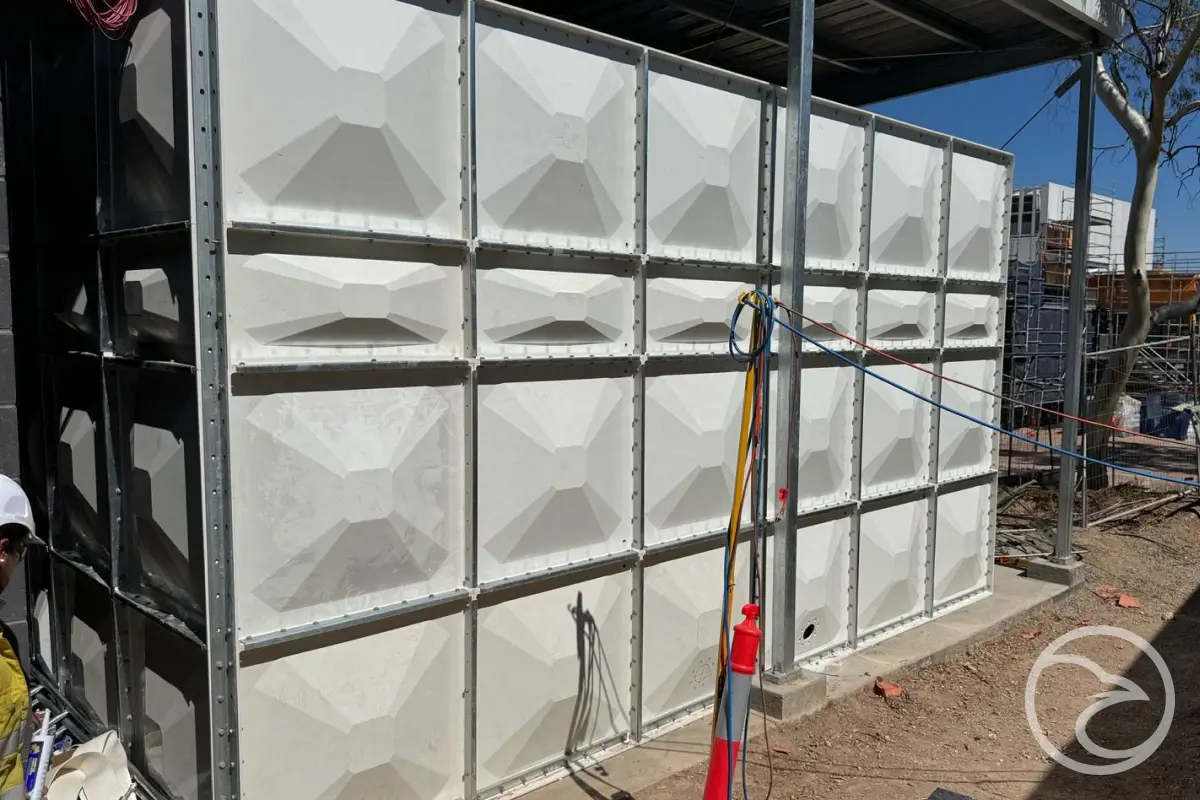
These material properties are commonly demonstrated in large containment systems, which are outlined further in this reference on modular storage constructions.
Summary: why These Properties Matter in Water Storage
The properties of fiberglass-reinforced materials make them well suited for water storage and containment environments. Their strength-to-weight efficiency, resistance to moisture, dimensional stability, and controlled flexibility support reliable long-term use.
By understanding how these properties influence structural behavior, engineers and system designers can better evaluate material performance across different storage conditions. Fiberglass-reinforced materials demonstrate how composite design principles can address the challenges associated with modern water storage systems.