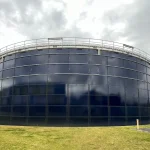
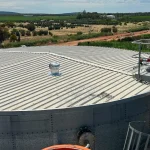
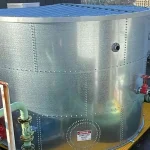
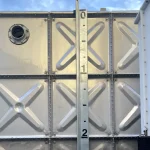
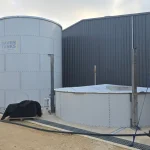
Industrial water storage systems are often exposed to conditions that accelerate material degradation. Constant moisture, temperature fluctuations, airborne contaminants, and chemical exposure all place significant stress on tank structures. In these environments, material selection becomes a critical factor in long-term performance. Galvanized water tanks are widely used in industrial settings because they provide reliable corrosion resistance while maintaining structural integrity over extended service periods.
Why Industrial Environments Accelerate Tank Corrosion
Unlike controlled indoor installations, industrial water tanks are frequently installed outdoors or in partially exposed locations. Rainwater, condensation, industrial pollutants, and fluctuating temperatures can create ideal conditions for corrosion to develop. Internal exposure also plays a role, particularly when stored water contains dissolved oxygen, minerals, or trace chemicals.
Over time, untreated steel surfaces can deteriorate rapidly in these conditions. Once corrosion begins, it can spread across seams, joints, and connection points, reducing structural strength and increasing maintenance requirements. This is why corrosion protection is a central consideration in industrial water storage design.
How the Hot-Dip Galvanizing Process Improves Durability
The hot-dip galvanizing process provides a proven method of protecting steel components from corrosion. During this process, fabricated steel sections are immersed in molten zinc, forming a bonded coating that covers all exposed surfaces. Unlike surface-applied paints or coatings, galvanizing creates a metallurgical bond that offers consistent protection across edges, welds, and bolt connections.
This zinc layer acts as both a physical barrier and a sacrificial coating. Even if the surface experiences minor damage, the zinc continues to protect the underlying steel by corroding preferentially. This makes galvanized coatings particularly effective in environments where mechanical wear, moisture, or chemical exposure are unavoidable.
Performance Advantages of Galvanized Water Tanks
Galvanized water tanks offer several performance advantages that make them suitable for demanding industrial applications. One of the most significant benefits is their resistance to long-term corrosion, even in harsh exposure zones. The protective zinc layer helps maintain structural integrity without relying on frequent recoating or surface treatment.
Another advantage is predictable service life. Galvanized steel behaves consistently over time, allowing engineers and asset managers to estimate performance based on environmental exposure rather than reacting to unexpected failures. This predictability supports long-term infrastructure planning and reduces operational uncertainty.
Additionally, galvanized water tanks generally require lower maintenance compared to untreated or painted steel systems. Routine inspections can focus on structural condition rather than surface degradation, helping reduce downtime and ongoing maintenance costs.
Typical Industrial Applications and Use Cases
These tanks are commonly used across a wide range of industrial sectors. Manufacturing facilities rely on galvanized water storage for process water, cooling systems, and emergency reserves. Energy and utility sites often use them in exposed locations where environmental conditions are difficult to control.
They are also suitable for infrastructure projects in remote or industrial zones where access for frequent maintenance may be limited. In such cases, corrosion-resistant steel tanks provide a practical balance between durability and long-term reliability. Even in demanding environments, galvanized water tanks can maintain performance with minimal intervention.

Design and Inspection Considerations for Long-Term Reliability
While galvanizing offers strong protection, proper design remains essential. Factors such as zinc coating thickness, joint detailing, and drainage all influence long-term performance. Areas where water may accumulate or where mechanical connections are present should receive particular attention during design and fabrication.
Environmental exposure should also be assessed carefully. Industrial atmospheres vary widely, and factors such as humidity, airborne chemicals, and temperature cycles can affect coating longevity. Periodic visual checks help confirm that protective layers remain intact and that structural components continue to perform as intended.
When Galvanized Steel is the Right Material Choice
Galvanized water tanks are most effective where corrosion resistance, structural strength, and predictable lifespan are required. In demanding industrial environments, they provide a dependable solution without the complexity of multi-layer coatings or frequent surface maintenance. While no material is universally ideal, galvanized steel remains a practical and well-established option for long-term industrial water storage under challenging conditions.