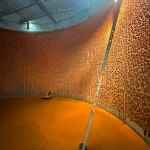
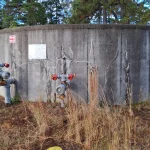
As industries move toward more sustainable water storage solutions, FRP industrial panel tanks have become a preferred choice for facilities seeking efficiency, durability and long-term performance. Made from corrosion-resistant fibre-reinforced plastics, these modular tank systems provide reliable storage for process water, treated water and industrial applications where stability and sustainability matter.
Unlike welded steel tanks, FRP industrial panel tanks are assembled on-site using prefabricated panels, reducing transportation challenges and installation time. Their lightweight composite structure allows for flexible sizing, enabling engineers to tailor tank dimensions to project demands without compromising reliability. This article explains how these tanks support efficient, sustainable water storage and why FRP technology is increasingly used across industrial sectors.
What are FRP Industrial Panel Tanks?
FRP (Fibre Reinforced Plastic) industrial panel tanks are modular composite structures designed for water storage in industrial and municipal environments. The tanks consist of moulded FRP panels connected with bolts and sealed using specialised gaskets to create a watertight design.
Their construction relies on layers of high-strength glass fibres embedded in resin, forming lightweight but structurally robust panels. This combination provides excellent resistance to corrosion, chemicals, moisture and temperature fluctuations, making FRP tanks suitable for demanding industrial conditions.
Because the tanks are assembled from separate sections, they can be installed in locations with limited access, expanded later or disassembled and relocated when operational needs shift.
Key Materials used in FRP Industrial Tanks
The performance and longevity of FRP industrial panel tanks depend on the materials used in the tank’s construction. Typical components include:
1. Composite FRP Panels
- Reinforced with high-tensile glass fibres
- Smooth inner surface for clean water storage
- UV-stabilised outer coating
- Corrosion-resistant structure
These characteristics reduce material fatigue, prevent rust and extend the tank’s service life.
2. Bolting and Sealing Hardware
- stainless steel or HDG bolts
- EPDM or neoprene gaskets
- washers and bracing components
High-quality sealing ensures continuous watertight performance, even in environments with temperature changes.
3. Structural Supports
- steel or FRP frames
- external bracing
- reinforced bases
The supporting framework maintains panel alignment and ensures structural stability under load.
How FRP Industrial Panel Tanks are Assembled
The installation process is efficient, making these tanks ideal for both new projects and upgrades of existing facilities:
- Step 1: Foundation Preparation: A level concrete foundation is prepared to support the tank’s weight and ensure long-term stability.
- Step 2: Panel Installation: FRP panels are arranged around the perimeter and gradually assembled into the tank’s full shape. The lightweight panels eliminate the need for heavy lifting equipment.
- Step 3: Bolting and Sealing: Panels are connected using bolts and compressed with gaskets. Proper sealing prevents leaks and ensures long-term integrity.
- Step 4: Roof System and Fittings: If required, roof panels, manholes, inspection hatches and internal bracing are added.
- Step 5: Final Inspection: The tank undergoes filling tests, visual inspection and commissioning procedures before being placed into service.
The modular installation method makes FRP industrial panel tanks faster to deploy than welded steel systems—an important advantage for projects with tight deadlines.
Efficiency Benefits of FRP Industrial Panel Tanks
FRP tanks contribute to operational efficiency in several ways, supporting both facility performance and long-term cost savings:
- 1. Reduced Maintenance Requirements: Because FRP does not rust or corrode, maintenance is minimal compared to steel tanks, which require periodic coating, cleaning and refurbishing.
- 2. Lightweight Structure: Lower panel weight reduces transportation costs, speeds up installation and allows placement in areas that cannot support heavy welded tanks.
- 3. Optimised Thermal Properties: FRP materials reduce heat transfer, helping maintain stable water temperatures in industrial processes.
- 4. Modular Expansion: Facilities can expand tank capacity without major reconstruction—simply adding new panels or adjusting the tank’s footprint.
Sustainability Advantages
Sustainability is one of the defining strengths of frp industrial panel tanks:
Corrosion Resistance and Long Life
Because FRP materials resist chemical and environmental degradation, the lifespan of these tanks is significantly longer than traditional steel alternatives. This reduces the need for replacements and lowers the overall environmental footprint.
Energy-Efficient Production
FRP manufacturing uses less energy than steel production, contributing to lower carbon emissions.
Lightweight Transportation
Lighter materials require fewer transport resources, reducing fuel use and greenhouse gas emissions.
Potential for Recycling
Depending on the resin system, some FRP components can be repurposed or partially recycled at the end of their service life.
Where FRP Industrial Panel Tanks are Used
These tanks are commonly used across industrial operations where reliable and sustainable water storage is essential:
- manufacturing facilities
- food and beverage production
- chemical processing plants
- mining and industrial camps
- wastewater and treatment facilities
- fire-water reserve systems
- large-scale agricultural operations
Their adaptability makes them suitable for both permanent and semi-permanent installations.
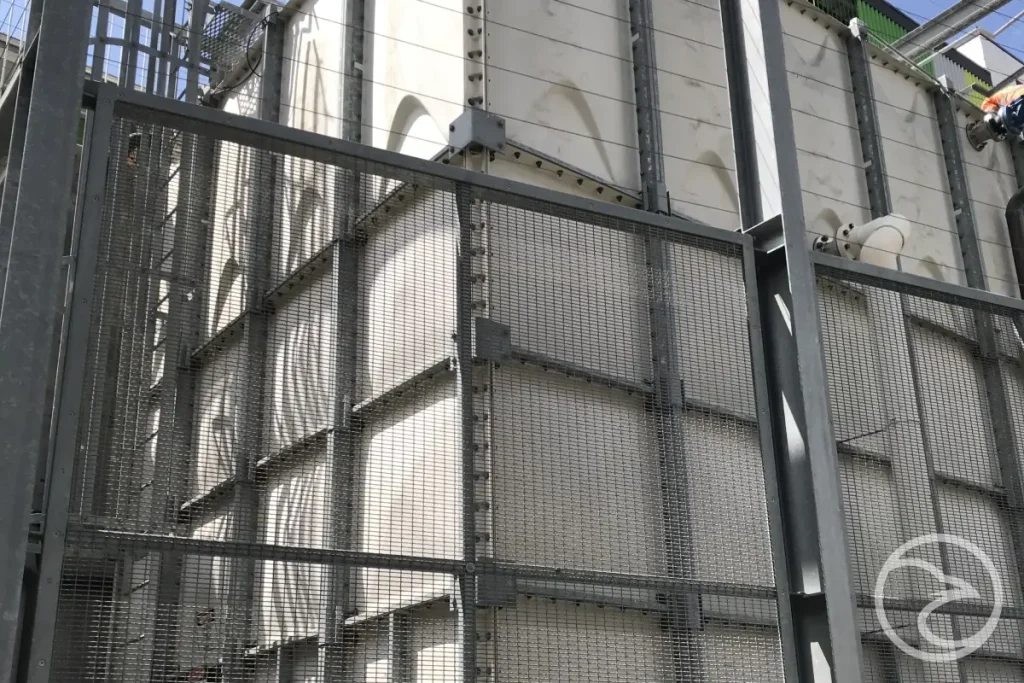
FRP Industrial Tanks vs. Steel Tanks
While both options serve industrial water storage needs, their differences are significant:
| Feature | FRP Panel Tanks | Welded Steel Tanks |
|---|---|---|
| Corrosion | No corrosion | Requires coatings |
| Installation | Fast, modular | Slow, requires welding |
| Weight | Lightweight | Heavy |
| Sustainability | High | Moderate |
| Maintenance | Very low | High |
FRP tanks provide superior sustainability and minimal upkeep, making them ideal for facilities focused on long-term operational efficiency. For full industrial FRP panel tank specifications, visit our technical overview page.
Conclusion
FRP industrial panel tanks offer a durable, sustainable and efficient solution for water storage across industrial environments. Their composite structure ensures long-term performance, while the modular assembly design allows installations in locations where welded tanks are impractical.
If your project requires engineered industrial tank solutions, visit our industrial panel tanks page for additional technical information.