Corrosion is one of the most common challenges affecting industrial storage tanks. Over time, exposure to moisture, chemicals, and environmental conditions can gradually weaken tank materials. If left unaddressed, corrosion may lead to leaks, structural damage, and costly repairs.
Understanding the causes of corrosion helps facility owners make informed maintenance decisions and extend tank service life.
What is Tank Corrosion?
Corrosion is the gradual deterioration of metal caused by chemical or electrochemical reactions. It occurs when metal surfaces interact with water, oxygen, chemicals, or other corrosive elements.
Although corrosion develops slowly, its long-term effects can significantly impact tank performance and safety.
Why Corrosion is a Serious Concern
Even minor corrosion can create larger problems over time.
Potential risks include:
- Reduced structural strength
- Leaks and product loss
- Contamination risks
- Increased maintenance costs
- Shorter asset lifespan
- Unexpected downtime
Early intervention helps prevent corrosion from progressing into major structural issues.
Moisture Exposure
Water is one of the primary causes of corrosion. Moisture can accumulate on both internal and external tank surfaces.
Common sources include:
- Rain and humidity
- Condensation
- Groundwater exposure
- Roof leaks
- Poor drainage
When moisture remains in contact with metal surfaces, corrosion can accelerate rapidly.
Chemical Exposure
Many tanks store materials that can contribute to corrosion. Some substances are naturally more aggressive than others.
Examples include:
- Industrial chemicals
- Wastewater
- Fertilizers
- Process liquids
- Salt-containing products
Even low concentrations of corrosive materials can gradually damage protective surfaces.
Coating Failure
Protective coatings act as a barrier between metal and corrosive elements. Once coatings begin to fail, the underlying material becomes vulnerable.
Warning signs include:
- Peeling paint
- Cracking coatings
- Bubbling surfaces
- Discoloration
- Exposed metal
Regular inspections help identify coating issues before corrosion spreads.
Poor Maintenance Practices
Maintenance plays a critical role in corrosion prevention. Small issues often become larger problems when inspections and repairs are delayed.
Common maintenance-related factors include:
- Missed inspections
- Delayed coating repairs
- Inadequate cleaning
- Poor drainage management
- Failure to address minor corrosion
Facilities that follow proactive maintenance programs often experience fewer corrosion-related issues.
Environmental Conditions
Environmental factors significantly influence corrosion rates. Tanks located in harsh environments often deteriorate more quickly.
Conditions that increase corrosion risk include:
- Coastal locations
- High humidity
- Frequent rainfall
- Industrial pollution
- Extreme temperature fluctuations
Environmental exposure should always be considered when planning maintenance activities.
Galvanic Corrosion
Galvanic corrosion occurs when two different metals come into contact in the presence of an electrolyte. This reaction causes one metal to corrode faster than the other.
Common examples include:
- Mixed-metal connections
- Fasteners and fittings
- Structural attachments
- Repair components
Proper material selection helps reduce galvanic corrosion risks.
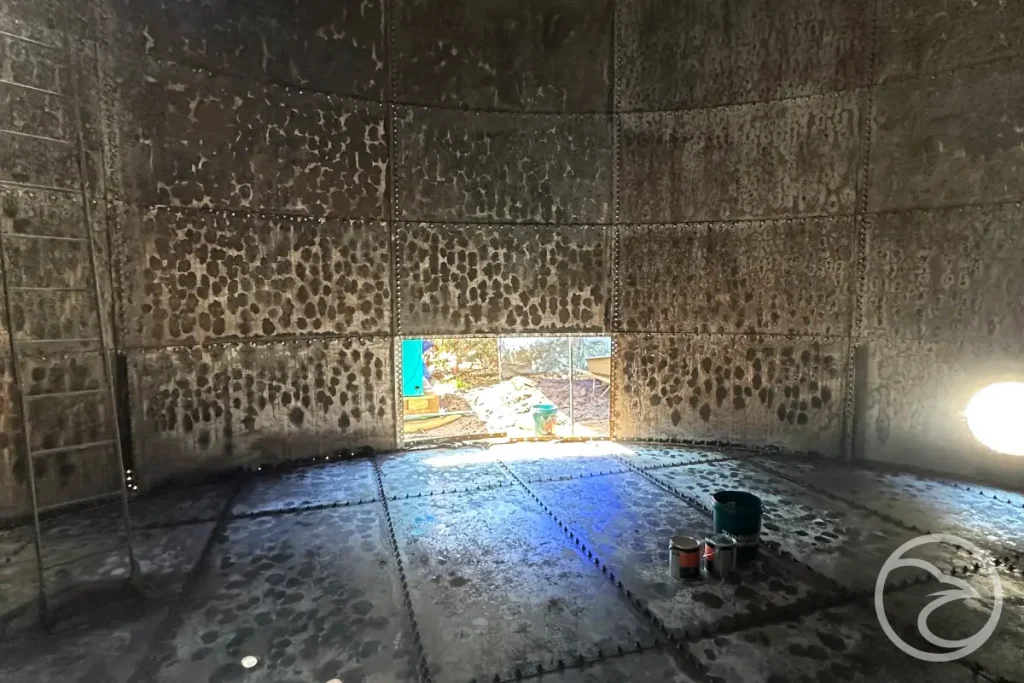
Internal Tank Corrosion
Not all corrosion is visible from the outside. Internal surfaces are often exposed to conditions that promote deterioration.
Factors may include:
- Stored product characteristics
- Condensation cycles
- Sediment buildup
- Water accumulation
- Chemical reactions
Regular inspections help identify hidden corrosion before significant damage occurs. Learn how tank inspections support refurbishment decisions and help identify corrosion-related issues early.
How Corrosion Leads to Refurbishment
Corrosion is one of the most common reasons tanks require refurbishment.
As deterioration progresses, facility owners may notice:
- Surface damage
- Material loss
- Structural weakening
- Coating failure
- Increased maintenance requirements
To understand when restoration may be necessary, explore the common signs a tank needs refurbishment.
Preventing Tank Corrosion
While corrosion cannot always be eliminated, it can often be controlled.
Effective prevention strategies include:
- Routine inspections
- Protective coating maintenance
- Surface preparation
- Moisture management
- Corrosion monitoring
- Timely repairs
A proactive approach helps reduce long-term maintenance costs and improve reliability.
Conclusion
Corrosion is a natural process, but its effects can be managed through proper maintenance and inspection practices. Moisture, chemicals, coating failure, environmental exposure, and poor maintenance are among the most common causes of tank deterioration.
Understanding these factors allows facility owners to protect assets, reduce risks, and make better long-term maintenance decisions. When corrosion becomes significant, a professional tank refurbishment assessment can help determine the most effective restoration strategy.